
Table of Contents
- Understanding the Core Differences: Bath Rug vs Bath Mat
- Safety Considerations in the Bath Rug vs Bath Mat Decision
- Material Matters: Which Fabric Works Best?
- Design & Aesthetic: Making the Choice Fit Your Décor
- Size, Placement, and Layering Strategies
- Maintenance, Longevity, and Eco‑Friendly Options
- Quick Tips for a Stylish and Safe Bathroom Floor
- Common Mistakes When Choosing Between a Bath Rug and a Bath Mat
- Frequently Asked Questions
- Putting It All Together: A Step‑by‑Step Guide
Bath Rug vs Bath Mat: Choosing the Perfect Bathroom Floor Piece
When it comes to finishing a bathroom, the floor layer right in front of the tub or shower often gets overlooked. Yet, the decision between a bath rug and a bath mat can dramatically affect safety, comfort, and the overall aesthetic of the space. Homeowners and renters alike are faced with a surprising number of options—different materials, sizes, textures, and even design themes—all promising to keep the floor dry while adding a decorative touch.
This article unpacks the practical and stylistic nuances of bath rug vs bath mat, helping you decide which option aligns with your lifestyle, design vision, and maintenance preferences. By the end, you’ll have a clear roadmap for selecting the right piece, arranging it effectively, and keeping it looking fresh for years to come.
Whether you’re redesigning a compact city apartment bathroom or updating a spacious master suite, the right choice can enhance safety, improve foot comfort, and become a subtle yet powerful design statement. Let’s explore the details.
Understanding the Core Differences: Bath Rug vs Bath Mat
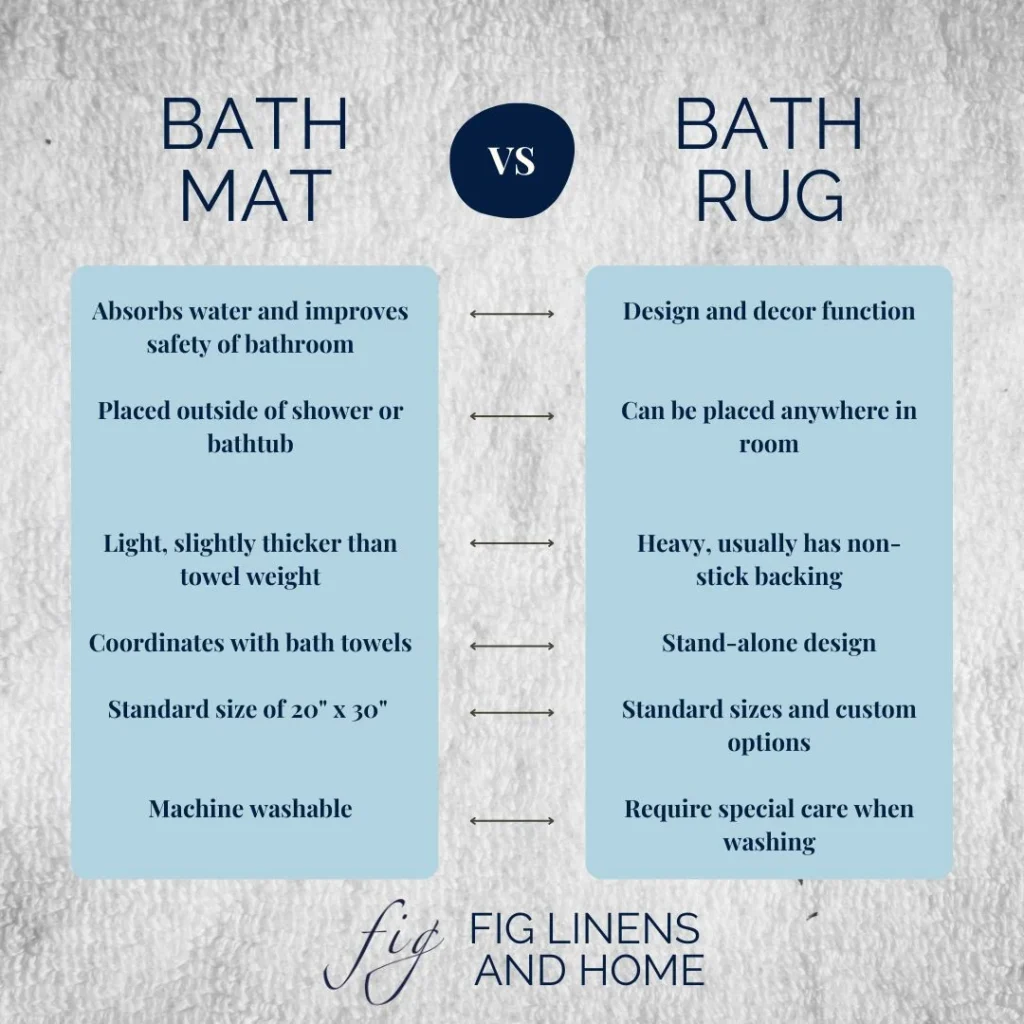
The first step in the bath rug vs bath mat debate is to recognize what each product fundamentally offers. A bath rug typically refers to a larger, plush piece that sits on the floor outside the tub or shower. It’s often made from absorbent cotton, microfiber, or a blend of natural fibers, and it may feature a decorative fringe or patterned border. Its primary role is to provide a soft, warm landing after stepping out of the water, while also adding a visual accent.
In contrast, a bath mat is usually smaller, thinner, and more utilitarian. Mats are designed to sit directly on the tub lip or shower threshold, acting as a slip‑resistant barrier that keeps water from spilling onto the bathroom floor. Materials range from quick‑dry microfiber to rubber‑backed silicone, and many mats incorporate a non‑slip backing for added safety.
While both serve the purpose of moisture control, the bath rug vs bath mat choice hinges on three key factors: safety, comfort, and style. Understanding how each factor plays out in real‑world use will guide you toward the most suitable option for your bathroom’s layout and your personal preferences.
Safety Considerations in the Bath Rug vs Bath Mat Decision
Safety is often the most compelling reason to choose a bath mat over a bath rug, especially in households with children, seniors, or anyone prone to slipping. Bath mats usually feature a textured underside—often made of rubber, silicone, or a suction‑cup system—that adheres securely to the tub rim or floor. This grip reduces the risk of the mat sliding when wet, offering a stable foothold.
However, many modern bath rugs come equipped with non‑slip backing as well. If you opt for a rug, look for a high‑quality anti‑skid backing or pair the rug with a non‑slip pad to achieve the same level of safety as a dedicated mat. In high‑traffic bathrooms, placing a small, slip‑resistant mat beneath the rug can combine the plush feel of a rug with the safety of a mat.
Beyond the backing, consider the rug’s thickness. A very thick rug can create a tripping hazard if it’s not flush with the floor. Choosing a low‑profile bath rug or trimming the rug edges to align with the tub edge can mitigate this risk while preserving comfort.
Material Matters: Which Fabric Works Best?
Material selection directly influences absorbency, drying time, durability, and visual appeal. For bath rug vs bath mat, here’s a quick rundown of the most common materials and their pros and cons:
- Cotton (e.g., Turkish, Egyptian): Highly absorbent, soft, and easy to wash. Ideal for a luxurious bath rug that feels like stepping onto a cloud.
- Microfiber: Fast‑drying, lightweight, and resistant to mildew. Frequently used for both rugs and mats because it balances softness with practicality.
- Memory Foam: Provides cushion and excellent water retention. Best for bath rugs where comfort is a priority, though it can take longer to dry.
- Rubber or Silicone: Common in bath mats for superior grip and water resistance. Not typically used for decorative rugs due to their rigid feel.
- Bamboo or Teak: Natural wood options with a sleek, modern look. Often featured in mat designs that include perforations for drainage.
When comparing bath rug vs bath mat, think about how often you’ll launder the piece. Rugs made of 100% cotton may shrink if not cared for properly, while microfiber mats can be tossed into the washing machine without much fuss. For a low‑maintenance solution, a quick‑dry microfiber bath mat paired with a cotton‑blend rug can give you the best of both worlds.
Design & Aesthetic: Making the Choice Fit Your Décor

Design is where the bath rug vs bath mat debate truly shines. A well‑chosen rug can serve as a focal point, echoing colors from towels, shower curtains, or wall tiles. Bold geometric patterns, soft pastel hues, or even nature‑inspired motifs can transform an otherwise plain bathroom into a curated sanctuary.
Bath mats, while generally more subdued, still offer design flexibility. Contemporary mats feature minimalist solid colors, subtle gradients, or even discreet logos that blend seamlessly with modern bathroom palettes. If your bathroom follows a minimalist home styling approach, a monochrome mat with a sleek silicone backing will complement the clean lines without overwhelming the space.
For those who love a pop of texture, a shaggy cotton bath rug adds depth and warmth, especially in colder climates. Pair it with a neutral mat for safety, and you achieve a balanced look—soft visual weight from the rug and functional security from the mat.
Size, Placement, and Layering Strategies
Choosing the right size is essential in the bath rug vs bath mat conversation. A bath rug should be large enough to accommodate foot traffic but not so big that it interferes with door swings or creates tripping hazards. Typically, a rug measuring 24‑30 inches wide and 48‑60 inches long works well for most tubs, while a larger 30‑36 inch width may suit a freestanding bathtub or a spacious shower area.
Bath mats, on the other hand, are usually 18‑20 inches wide and 24‑30 inches long, designed to sit neatly against the tub lip. When layering, place the mat directly on the tub edge first, then position the rug in front of it. This arrangement ensures the mat provides its anti‑slip function while the rug offers a plush landing surface.
Here’s a quick checklist for optimal placement:
- Measure the distance from the tub edge to the nearest wall or door.
- Select a rug that leaves at least 6‑8 inches of clear floor space for movement.
- Ensure the mat’s backing adheres firmly to the tub without curling.
- Use a low‑profile rug pad if additional cushioning is needed.
- Regularly straighten edges to prevent folds that could cause trips.
In smaller apartments, a single multifunctional piece—such as a bath mat with a plush top layer—can serve both safety and comfort needs, reducing clutter while still addressing the core concerns of the bath rug vs bath mat debate.
Maintenance, Longevity, and Eco‑Friendly Options
Both bath rug and bath mat require routine care to maintain hygiene and appearance. Cotton rugs should be washed in warm water with a mild detergent, then tumble‑dried on low heat to avoid shrinking. Microfiber mats can be machine‑washed and often dry quickly, making them ideal for busy households.
If sustainability matters to you, consider organic cotton or bamboo‑derived fibers for rugs. These materials are renewable, biodegradable, and often produced with fewer chemicals. For mats, look for silicone or recycled rubber options that reduce landfill waste while still delivering excellent grip.
To extend lifespan, follow these simple habits:
- Shake out excess water after each use to prevent mildew.
- Air‑dry the rug or mat in a well‑ventilated area, preferably outdoors on a sunny day.
- Rotate the rug every few weeks to ensure even wear.
- Replace the non‑slip backing when it starts to lose adhesion, rather than discarding the entire piece.
By treating your bath rug vs bath mat with consistent care, you’ll enjoy both functional performance and visual appeal for many years.
Quick Tips for a Stylish and Safe Bathroom Floor
- Combine a low‑profile, anti‑slip bath mat with a plush cotton rug for maximum comfort and safety.
- Choose a rug color that complements your existing bathroom palette—think muted greys for a modern look or soft blues for a spa‑like vibe.
- Opt for a mat with a silicone backing if your tub surface is smooth; this prevents any movement when the mat gets wet.
- Regularly wash both pieces to avoid odor buildup and maintain a fresh environment.
- For a coordinated look, match the rug’s fringe or border with the texture of your towel set.
Common Mistakes When Choosing Between a Bath Rug and a Bath Mat
Even seasoned decorators can slip up—pun intended—when navigating the bath rug vs bath mat landscape. Below are frequent pitfalls and how to avoid them:
- Choosing only for aesthetics: Selecting a decorative rug without considering slip resistance can create a safety hazard. Pair any rug with a reliable mat underneath.
- Ignoring size constraints: An oversized rug may block doorways or become a tripping obstacle. Measure your space accurately before purchasing.
- Neglecting material care: Some “luxury” rugs require dry‑cleaning only, which isn’t practical for a bathroom environment. Opt for machine‑washable fabrics for ease of maintenance.
- Overlooking the tub shape: Curved or freestanding tubs may need custom‑shaped rugs or mats. Standard rectangular pieces can bunch up or slide on irregular surfaces.
- Forgetting ventilation: A damp rug left in a closed bathroom can develop mold. Ensure your bathroom has proper exhaust or place the rug where it can dry quickly.
Frequently Asked Questions
Can I use a bath rug without a bath mat?
Yes, you can, but it’s essential to choose a rug with a high‑quality anti‑slip backing. Without the added grip of a mat, a rug alone may shift on wet surfaces, especially on smooth porcelain or acrylic tubs.
What is the best material for a hypoallergenic bathroom floor?
Microfiber and bamboo fabrics are naturally resistant to dust mites and mold. Look for rugs labeled “antimicrobial” and mats with silicone backing that doesn’t harbor bacteria.
How often should I replace my bath rug or bath mat?
Generally, replace a bath rug every 2‑3 years, depending on wear and washing frequency. Mats with silicone backing can last 4‑5 years if the grip remains strong; replace them once the backing starts to peel.
Is it okay to place a rug on a heated floor?
Yes, but choose a rug made of natural fibers like cotton or wool that can tolerate low‑heat settings. Avoid rubber‑backed mats on heated floors, as they can interfere with heat distribution.
Do bath rugs add value to a home?
While a rug alone isn’t a major value driver, a well‑styled bathroom—complete with coordinated rugs and mats—contributes to overall aesthetic appeal, which can positively influence buyer perception during a sale.
Putting It All Together: A Step‑by‑Step Guide
Now that you’ve explored the many facets of bath rug vs bath mat, here’s a concise roadmap to help you implement the right solution in your bathroom:
- Assess safety needs: If you have children or seniors, prioritize a non‑slip mat with strong backing.
- Determine style direction: Choose a rug that reflects your décor—whether that’s a bold pattern, a neutral tone, or a natural fiber texture.
- Measure the space: Take accurate measurements of the area in front of the tub and the tub lip itself.
- Select material: Opt for cotton or microfiber for comfort, silicone or rubber for grip, and consider eco‑friendly options if sustainability matters.
- Plan placement: Place the mat first, then lay the rug in front, ensuring both pieces are flat and edges are aligned.
- Test for slip: Step onto the rug after a simulated shower (wet your feet) to confirm that there’s no movement.
- Maintain regularly: Wash according to the care label, air‑dry, and replace when wear becomes evident.
By following these steps, you’ll master the bath rug vs bath mat decision and create a bathroom that feels both safe and stylish.
For more ideas on how to harmonize bathroom accessories with the rest of your home, explore our guide on small living room décor ideas. The same principles of balance, texture, and color can translate beautifully to bathroom design.
Ready to transform your bathroom floor? Whether you lean toward a plush, inviting rug or a sleek, functional mat, the key is to align the choice with your daily routines and aesthetic preferences. A thoughtful blend of safety, comfort, and style will not only protect your floors but also elevate the entire room’s atmosphere.
Enjoy experimenting with textures, colors, and layouts—your bathroom is the perfect canvas for a subtle yet impactful design upgrade. Happy styling!