
Table of Contents
- Hunter vs Casablanca Fans: Brand History and Core Philosophy
- Design Aesthetics: Matching the Fan to Your Home Décor
- Hunter vs Casablanca Fans: Style Integration Tips
- Performance Metrics: Airflow, Energy Efficiency, and Smart Features
- Installation Considerations: Space, Mounting Options, and DIY Friendliness
- Maintenance, Longevity, and Warranty Support
- Budget and Value: Cost vs. Feature Trade‑offs
- Integrating the Fan with Room Décor: Practical Styling Ideas
- Quick Home Décor Tips for Ceiling Fan Lovers
- Common Mistakes to Avoid When Selecting a Ceiling Fan
- Frequently Asked Questions
Hunter vs Casablanca Fans: Choosing the Perfect Ceiling Fan for Your Home
When it comes to ceiling fans, two names often dominate the conversation among homeowners and interior‑design enthusiasts: Hunter and Casablanca. Both brands have built strong reputations over decades, yet they cater to slightly different tastes, performance expectations, and price points. Understanding the nuances between Hunter vs Casablanca fans can save you time, money, and future frustration, especially when you’re aiming for a cohesive look in a living room, bedroom, or open‑plan space.
This article breaks down the key factors that matter most when selecting a ceiling fan—style, airflow, energy efficiency, installation ease, and long‑term maintenance. By the end of the read, you’ll be equipped to decide which brand aligns with your design vision and functional needs, and you’ll have actionable tips to integrate the chosen fan seamlessly into your home décor.
Hunter vs Casablanca Fans: Brand History and Core Philosophy

Hunter was founded in 1886 and quickly became synonymous with reliable, mass‑market fans that balance affordability with solid engineering. Their product line spans classic wooden blades, sleek modern finishes, and smart‑connected models that integrate with home automation systems. Hunter’s design language often leans toward versatility, making its fans a safe choice for a wide variety of interior styles.
Casablanca entered the market in the 1970s, positioning itself as a premium, design‑forward brand. The company emphasizes handcrafted details, high‑end materials such as hand‑finished wood and brushed metal, and meticulous airflow engineering. Casablanca fans are frequently featured in luxury hotels and upscale residences, reflecting a commitment to both aesthetics and performance that justifies a higher price tag.
Both brands share a commitment to safety and energy standards, but the underlying philosophies differ: Hunter focuses on universal appeal and value, while Casablanca pursues boutique elegance and top‑tier performance. Recognizing these brand identities helps you align a ceiling fan with the overall mood you want to create in a room.
Design Aesthetics: Matching the Fan to Your Home Décor
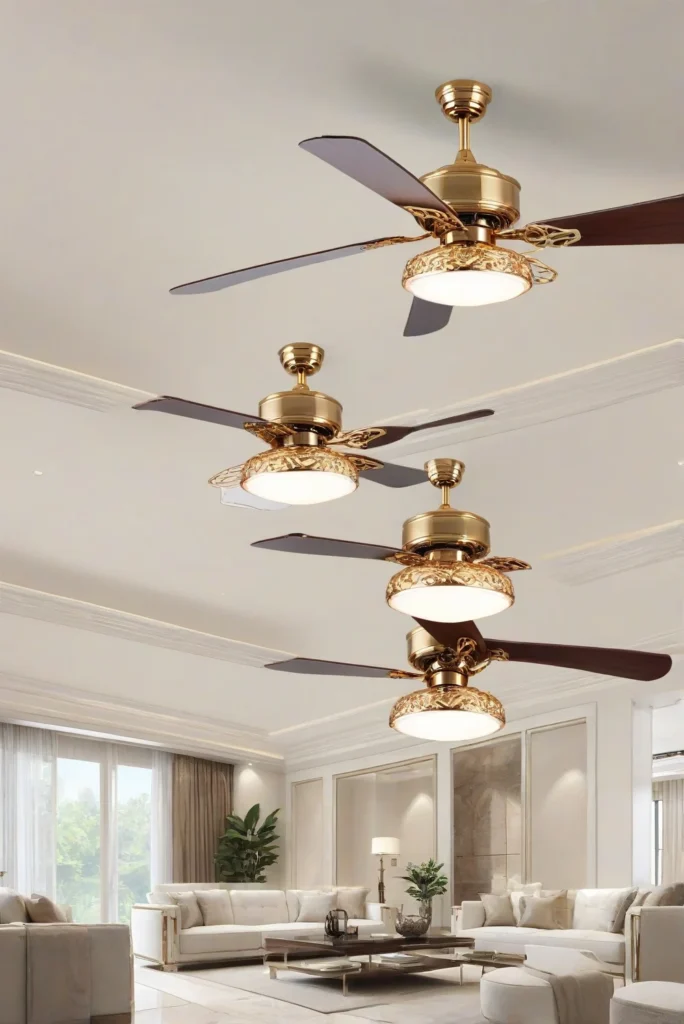
One of the most visible decisions in the hunter vs casablanca fans debate is how the fan’s visual language integrates with existing décor. Hunter offers a broad palette—traditional walnut, brushed nickel, matte black, and even vibrant colors—that can complement both rustic farmhouse interiors and contemporary minimalism. Their blade profiles range from deep‑curved to ultra‑slim, allowing you to tailor the silhouette to ceiling height and room proportion.
Casablanca, on the other hand, leans heavily into statement pieces. Hand‑carved wooden blades, intricate metal lattices, and custom‑finished options give each fan a sculptural quality. If you’re designing a living room that already boasts high‑end furnishings, a Casablanca fan can serve as a focal point that reinforces a luxurious ambiance. Conversely, in a modestly sized bedroom, a Hunter fan with a simple, understated finish may blend more naturally without overwhelming the space.
When choosing between the two, ask yourself: Do I want the fan to recede into the background or to act as a decorative centerpiece? For rooms where you aim to highlight architectural details, a Casablanca fan’s unique silhouette can echo ceiling moldings or wall art. For spaces where you prefer a cohesive, low‑profile look, a Hunter model often provides the right balance.
Hunter vs Casablanca Fans: Style Integration Tips
- Color coordination: Pair a matte‑black Hunter fan with industrial‑style metal fixtures for a cohesive vibe.
- Scale matters: In rooms with low ceilings (under 8 feet), choose a Hunter fan with shorter blade span to maintain airflow without feeling cramped.
- Accent lighting: Casablanca fans often feature integrated LED rings; use this to add ambient lighting that complements pendant lamps or wall sconces.
Performance Metrics: Airflow, Energy Efficiency, and Smart Features
Beyond aesthetics, the core function of any ceiling fan is to move air efficiently. Hunter’s most popular models typically deliver between 3,000 and 5,000 cubic feet per minute (CFM) using DC motors that reduce energy consumption by up to 70 % compared with traditional AC motors. Many Hunter fans also support Wi‑Fi connectivity, allowing you to control speed, lighting, and reverse direction through smartphone apps or voice assistants.
Casablanca fans excel in airflow precision. Their proprietary “QuietTech” motor designs generate high CFM ratings—often exceeding 6,000—while maintaining whisper‑quiet operation. The brand’s focus on blade pitch and aerodynamic shaping means you can achieve greater air movement with fewer revolutions per minute, which further cuts power usage. Some Casablanca models incorporate built‑in air purifiers or humidity sensors, expanding the fan’s role from simple circulation to a component of a holistic indoor‑environment strategy.
When evaluating hunter vs casablanca fans for performance, consider the room’s square footage, ceiling height, and typical climate. A high‑CFM Casablanca fan might be overkill for a small bedroom, whereas a modest Hunter fan could under‑perform in a large, open‑plan living area during summer heat waves.
Installation Considerations: Space, Mounting Options, and DIY Friendliness
Installation can be a decisive factor, especially for DIY‑oriented homeowners. Hunter fans are generally praised for straightforward mounting kits, clear instructions, and a variety of mounting options—including flush‑mount (hugger) and standard downrod configurations. Their lighter weight also simplifies ceiling reinforcement requirements, which is helpful in older homes with limited joist support.
Casablanca fans, due to their premium materials and larger blade spans, often weigh more and may require additional ceiling reinforcement or professional installation. While many Casablanca models come with comprehensive mounting hardware, the complexity of wiring for integrated lighting and smart controls can be intimidating for first‑time installers. However, the investment in professional installation frequently pays off in reduced vibration and optimal airflow alignment.
Regardless of brand, always verify the fan’s clearance requirements. A general rule of thumb is to maintain at least 7 feet of clearance from the floor to the fan blades for safety. For rooms with sloped ceilings or exposed beams, consider a low‑profile downrod or a recessed mounting kit to preserve the aesthetic flow.
Maintenance, Longevity, and Warranty Support
Long‑term satisfaction with a ceiling fan depends on how easy it is to clean and how durable the components are. Hunter fans typically feature reversible blade designs that make dust removal simple—just a soft cloth and occasional vacuum of the motor housing. Their warranties often cover the motor and electrical components for 5–7 years, reflecting confidence in long‑term reliability.
Casablanca’s premium construction translates to longer lifespan under proper care. Hand‑finished wooden blades may require occasional polishing to maintain luster, but the underlying motor is built for heavy usage and comes with a 10‑year warranty on most models. Additionally, Casablanca offers a “Lifetime Service” program for certain high‑end lines, providing free motor replacements if any mechanical issues arise.
Both brands recommend turning off power at the circuit breaker before cleaning and using a gentle, non‑abrasive cleaner. For fans equipped with LED lighting, avoid harsh chemicals that can damage the lenses or diffusers.
Budget and Value: Cost vs. Feature Trade‑offs
Pricing is where hunter vs casablanca fans often diverge sharply. Entry‑level Hunter fans start around $150–$250, making them accessible for budget‑conscious remodels or rental properties. Mid‑range Hunter models, especially those with smart connectivity, can climb to $400–$600.
Casablanca fans typically start at $500 and can exceed $2,000 for limited‑edition designs with custom finishes and integrated lighting. While the upfront cost is higher, the perceived value comes from superior craftsmanship, higher CFM, and a longer warranty period. If you view the fan as a statement piece that adds resale value, the investment may be justified.
To make a financially sound decision, calculate the expected energy savings from DC motors and LED lighting, and weigh them against the purchase price. Over a five‑year period, a high‑efficiency Casablanca fan may recoup part of its cost through lower electricity bills, especially in regions with high utility rates.
Integrating the Fan with Room Décor: Practical Styling Ideas
Once you’ve chosen between hunter vs casablanca fans, the next step is to harmonize the fan with the room’s overall design. Here are a few practical approaches:
- Layered lighting: Pair a Hunter fan with a dimmable pendant lamp for flexible ambiance. The combination works well in living rooms where you want both direct and indirect lighting.
- Texture contrast: Use a Casablanca fan’s polished metal blades to offset a soft, plush sofa and textured rug, creating visual interest without clashing.
- Color accents: Match the fan’s finish to other metal hardware in the room—door handles, picture frames, or cabinet pulls—to create a cohesive look.
For inspiration on how to incorporate decorative accessories around your fan, check out our guide on Simple Glass Jars: Elevate Kitchen Décor Easily. Although focused on the kitchen, the principle of using understated elements to enhance a space applies equally to living‑room styling around a ceiling fan.
Quick Home Décor Tips for Ceiling Fan Lovers
- Choose a fan with reversible blades to maximize airflow in both summer and winter.
- Install a remote control or smart hub to adjust speed without getting up—ideal for high ceilings.
- Balance blade pitch and size to ensure optimal air movement without excessive noise.
- Incorporate a fan into a gallery wall by aligning the downrod with surrounding artwork for a unified composition.
- Use low‑profile fans in small apartments to maintain ceiling height perception.
Common Mistakes to Avoid When Selecting a Ceiling Fan
Even experienced homeowners can slip up during the selection process. Below are common pitfalls and how to sidestep them:
- Ignoring room dimensions: A 60‑inch fan in a 70‑square‑foot bedroom can feel overpowering. Use a sizing chart based on square footage.
- Overlooking blade clearance: Ensure there’s sufficient space from the ceiling to the blades, especially in rooms with exposed beams.
- Choosing solely on price: While budget matters, a cheap fan with low CFM may increase reliance on air conditioning, raising long‑term costs.
- Neglecting style cohesion: A modern stainless‑steel fan can clash with a traditional Victorian interior; aim for complementary aesthetics.
- Skipping professional installation for heavy fans: Improper mounting can lead to wobble, noise, or safety hazards.
Frequently Asked Questions
Which brand offers better energy efficiency?
Both Hunter and Casablanca provide DC‑motor options that dramatically reduce power usage, but Hunter’s entry‑level models often have a slight edge in cost‑per‑watt efficiency due to their broader market focus.
Can I control a Casablanca fan with my smart home system?
Yes, many recent Casablanca fans include Wi‑Fi modules compatible with Alexa, Google Assistant, and Apple HomeKit, allowing voice‑activated speed and lighting control.
Do Hunter fans come with integrated lighting?
Several Hunter models feature built‑in LED kits with adjustable color temperature, providing both illumination and airflow in a single unit.
Is it worth investing in a premium Casablanca fan for a small bedroom?
Generally, a high‑CFM Casablanca fan may be oversized for a compact bedroom, leading to unnecessary expense. A smaller Hunter model usually delivers adequate airflow with a lower price point.
How often should I clean my ceiling fan?
Aim to dust the blades monthly and perform a deep clean every 3–4 months. Regular maintenance ensures consistent performance and prolongs motor life.
By addressing these questions, you can make a more confident decision that aligns with both functional needs and aesthetic goals.
Choosing between hunter vs casablanca fans ultimately depends on your design vision, performance requirements, and budget constraints. Whether you gravitate toward Hunter’s versatile, budget‑friendly lineup or Casablanca’s high‑end, design‑centric pieces, the right fan can become a silent partner in comfort and style. Take the time to assess room dimensions, décor themes, and long‑term energy goals, and you’ll find a ceiling fan that not only cools the air but also elevates the visual narrative of your home.