
Table of Contents
- Understanding Hip Replacement Recovery Needs
- Key Features to Look for in an Office Chair
- Adjustable Seat Depth
- Dynamic Lumbar Support
- Height‑Adjustable Armrests
- Swivel and Casters
- Breathable, Supportive Upholstery
- Finding the Perfect Office Chair After Hip Replacement Surgery
- Finding the Perfect Office Chair After Hip Replacement Surgery: A Checklist
- Materials and Build Quality for Long‑Term Comfort
- Frame Construction
- Seat Cushioning
- Upholstery Choices
- Styling the Chair to Fit Your Home Office Aesthetic
- Budgeting and Testing: How to Choose Wisely
- Prioritize Features Over Brand
- Take Advantage of Return Policies
- Quick Tips for Immediate Comfort
- Common Mistakes to Avoid
- Frequently Asked Questions
Finding the Perfect Office Chair After Hip Replacement Surgery
Recovering from hip replacement surgery is a journey that blends medical care with everyday comfort. One of the most overlooked yet essential elements of this recovery is the chair you sit in while you work, read, or video‑call. A poorly designed seat can place unwanted pressure on the new joint, delay healing, and even cause pain that feels unrelated to the surgery itself.
Choosing a chair that supports proper posture, reduces hip strain, and fits into your home office aesthetic isn’t just a luxury—it’s a practical step toward a smoother rehabilitation. In the following guide, you’ll discover the ergonomic principles, material considerations, and style tips that help you locate the ideal chair for life after hip replacement.
Whether you’re setting up a temporary workspace at home or upgrading a permanent office, the recommendations below will help you balance medical advice with modern design, ensuring you stay productive without compromising your health.
Understanding Hip Replacement Recovery Needs

After a hip replacement, the surrounding muscles and ligaments need time to adapt to the new joint. Surgeons often recommend avoiding prolonged static positions, especially those that force the hip into extreme flexion or rotation. A chair that encourages neutral pelvic alignment can reduce stress on the implant and promote better circulation.
Key recovery goals include:
- Maintaining a slight forward tilt of the pelvis to keep the hip in a safe range of motion.
- Ensuring the thighs are parallel to the floor, preventing excessive hip flexion.
- Allowing easy transitions between sitting, standing, and short walks—activities that are crucial for preventing stiffness.
When you keep these objectives in mind, the search for the right chair becomes a focused, evidence‑based process rather than a vague trial-and‑error exercise.
Key Features to Look for in an Office Chair
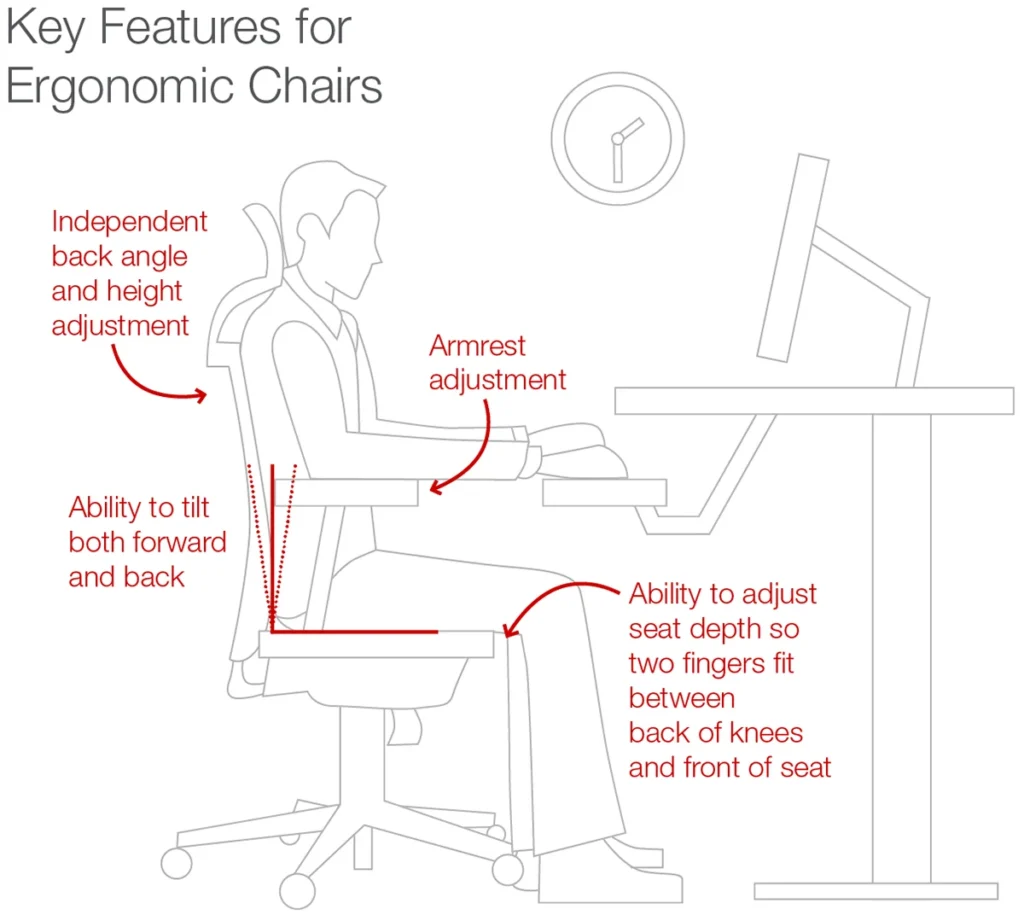
Not every ergonomic chair will meet the specific demands of a post‑hip‑replacement body. Below are the features that should rank highest on your checklist.
Adjustable Seat Depth
A seat that can slide forward or backward lets you position the back of your knees at a comfortable 90‑degree angle. This prevents the hip from being forced into a cramped position, which could irritate the surgical site.
Dynamic Lumbar Support
While lumbar support is often praised for protecting the lower back, it also influences the tilt of the pelvis. Look for a support system that can be raised or lowered, and that flexes with your movements, encouraging a natural curve.
Height‑Adjustable Armrests
Armrests that move up, down, inward, and outward allow you to keep your shoulders relaxed and your elbows at roughly a 90‑degree angle. Proper arm positioning reduces the need to hunch, which in turn protects the hip joint from compensatory strain.
Swivel and Casters
A smooth‑rotating base and quality casters mean you won’t have to twist your torso or hips to reach for items. Choose wheels that match your floor type—hard‑floor rollers for carpeted spaces, and softer polyurethane wheels for hardwood.
Breathable, Supportive Upholstery
Materials such as mesh or high‑density foam promote airflow, preventing heat buildup that can aggravate swelling. However, ensure the cushion is firm enough to maintain consistent support; a sagging seat can alter hip alignment over time.
Finding the Perfect Office Chair After Hip Replacement Surgery

Now that you know what to look for, it’s time to apply those criteria in a systematic way. The following step‑by‑step approach streamlines the decision‑making process.
Finding the Perfect Office Chair After Hip Replacement Surgery: A Checklist
- Measure your dimensions. Sit on a stool, record the distance from the floor to the top of your thigh, and the length of your lower back. Use these numbers to set the chair’s height and seat depth.
- Test the tilt mechanism. Engage the recline and forward‑tilt features. You should feel a gentle, controlled motion that keeps the hips slightly open.
- Check the weight capacity. Post‑surgery swelling can add a few pounds; choose a chair rated at least 20 % above your current weight.
- Assess the armrest range. Ensure you can adjust them low enough that your forearms rest comfortably without raising your shoulders.
- Consider the aesthetic. A chair that complements your existing décor makes it more likely you’ll use it consistently.
When possible, spend at least 15 minutes in the chair, mimicking the tasks you’ll perform daily—typing, reading, and video meetings. If the chair feels “right” during this trial, it’s a strong indicator that you’ve found a match.
Materials and Build Quality for Long‑Term Comfort
Durability matters just as much as adjustability. A chair that loses its shape after a few months can re‑introduce harmful postures, undoing weeks of careful recovery work.
Frame Construction
Steel or reinforced aluminum frames provide stability without excessive weight. Look for welded joints rather than bolted ones; welded connections tend to hold up better under repeated adjustments.
Seat Cushioning
High‑resilience foam, often rated as “HR foam,” maintains its firmness over years. Some premium models incorporate a thin memory‑foam layer for micro‑adjustments while preserving overall support.
Upholstery Choices
Mesh offers excellent breathability, which is helpful if you experience postoperative swelling. Leather, while stylish, can become hot and may trap moisture, making it less ideal for extended sitting periods.
For a touch of design inspiration, see our modern neutral apartment styling guide, which demonstrates how to blend functional furniture with a cohesive aesthetic.
Styling the Chair to Fit Your Home Office Aesthetic
Choosing a chair that supports healing doesn’t mean you have to sacrifice style. Contemporary home offices often combine clean lines with warm textures, and the right chair can become a focal point rather than a hidden utility.
- Color coordination. Neutral tones—gray, navy, or muted earth—pair well with most office palettes. If you enjoy a pop of color, select a chair with a removable cushion cover.
- Material harmony. Pair a mesh back with a wooden desk for a modern‑industrial vibe, or choose a fabric‑upholstered seat to match a soft rug.
- Accessory integration. A sleek lumbar pillow or a small footrest can enhance ergonomics while adding visual interest.
Don’t forget the surrounding décor. Adding a cozy seat cushion to a balcony nook can inspire a cohesive “comfort” theme throughout your living space.
Budgeting and Testing: How to Choose Wisely
High‑quality ergonomic chairs range from $200 to $1,500+. While a higher price often reflects better materials and more adjustment options, you don’t need to break the bank to find a suitable chair for post‑hip‑replacement needs.
Prioritize Features Over Brand
Identify the three adjustments that matter most—seat depth, lumbar support, and armrest mobility—and compare models based on those criteria. A lesser‑known brand that excels in these areas can be a smarter investment than a premium label lacking specific adjustability.
Take Advantage of Return Policies
Many retailers offer a 30‑day trial period. Use this window to test the chair in real work scenarios, noting any pressure points or alignment issues. Document your observations in a simple checklist to make an informed decision.
Quick Tips for Immediate Comfort
- Place a small lumbar roll on the back of the chair until you fine‑tune the built‑in support.
- Keep a footstool nearby to relieve pressure on the hips during longer sessions.
- Adjust the monitor height so your eyes are level with the top third of the screen; this promotes a neutral neck and hip posture.
Common Mistakes to Avoid
Even with a perfect chair, certain habits can undermine its benefits.
- Sitting for too long. Aim to stand or stretch every 30‑45 minutes. Prolonged static sitting can increase joint stiffness.
- Using a chair that’s too soft. A plush cushion may feel luxurious but can cause the hips to sink, increasing flexion.
- Ignoring foot placement. Keep feet flat on the floor or on a footrest; dangling legs shift the pelvis forward, stressing the hip.
Frequently Asked Questions
Can I use my existing office chair after hip replacement?
Often you can, but only if the chair offers sufficient adjustability for seat depth, height, and lumbar support. If the current chair forces you to sit with hips flexed beyond 90°, it’s best to upgrade.
Is a standing desk a good alternative?
A standing desk can reduce sitting time, yet it should be paired with an ergonomic stool or chair for periods when you need to sit. Transition slowly to avoid overloading the new joint.
What type of cushion is best for postoperative swelling?
A thin, high‑resilience foam cushion with breathable cover helps disperse pressure evenly while allowing airflow, minimizing heat buildup that could exacerbate swelling.
Do I need a specific chair for left‑ versus right‑side hip replacement?
If the surgery was on one side, you may benefit from a chair that allows asymmetrical adjustments, such as a swivel that can be locked to one side or a seat tilt that favors the operated hip.
How often should I replace my office chair after surgery?
Monitor the chair’s wear. If the seat depth or lumbar support begins to sag, replace it within 2‑3 years to maintain optimal alignment and avoid re‑injury.
Is it okay to use a gaming chair for post‑surgery work?
Gaming chairs often have deep seats and aggressive recline, which may not suit the need for a neutral hip angle. If you choose one, ensure you can adjust the seat forward and keep the thighs parallel to the floor.
Finding the perfect office chair after hip replacement surgery is a blend of medical insight, ergonomic science, and personal style. By focusing on adjustability, support, and material quality, you can create a workspace that respects your healing process while keeping your home office looking polished.
Take the time to test multiple models, use the quick tips to fine‑tune your setup, and stay mindful of posture throughout the day. With the right chair, you’ll enjoy productivity, comfort, and a smoother recovery—all while maintaining the modern aesthetic that defines your living space.
[ CATEGORY ]: Home Organization