
Table of Contents
- How Does a Touchless Kitchen Faucet Work? The Core Components
- How Does a Touchless Kitchen Faucet Work – Sensor Technology Explained
- Benefits of Going Touchless in the Kitchen
- Installation Considerations and Compatibility
- Design Integration: Matching Your Faucet to Kitchen Aesthetics
- Maintenance and Troubleshooting Tips
- How Does a Touchless Kitchen Faucet Work – Common Issues and Fixes
- Quick Tips for Optimizing Your Touchless Faucet
- Common Mistakes to Avoid When Choosing a Touchless Faucet
- Frequently Asked Questions
- Can I install a touchless faucet myself?
- Do touchless faucets work with hot water?
- How much water can I save with a touchless faucet?
- Are touchless faucets safe for children?
- What is the typical lifespan of a touchless faucet?
- Integrating Touchless Faucets into a Holistic Home Décor Plan
- Future Trends: Smart Integration and Eco‑Friendly Features
- Conclusion
How Does a Touchless Kitchen Faucet Work? A Complete Guide
Touchless kitchen faucets have become a staple in modern homes, offering a blend of convenience, hygiene, and sleek design. Whether you’re renovating a family kitchen or upgrading a compact apartment space, understanding the mechanics behind these faucets can help you make an informed choice. In this guide, we’ll explore the inner workings of touchless faucets, the technology that powers them, and practical considerations for installation and everyday use.
Beyond the novelty factor, a touchless faucet can reduce water waste, limit the spread of germs, and complement a contemporary interior aesthetic. Homeowners, renters, and interior design enthusiasts alike benefit from knowing how the sensor system interacts with water flow, what maintenance it requires, and how it fits into broader home décor strategies. Let’s dive into the details so you can decide if a touchless faucet is the right addition to your kitchen.
How Does a Touchless Kitchen Faucet Work? The Core Components
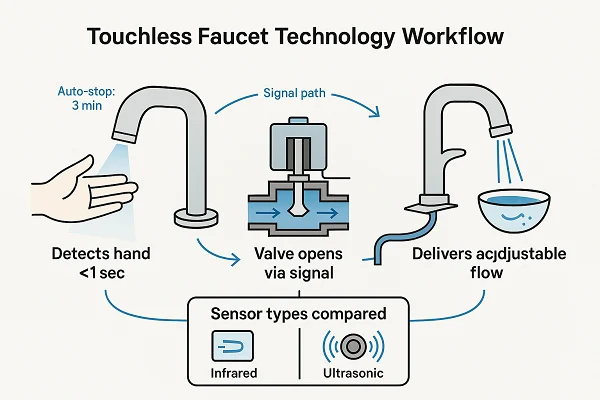
The basic principle behind a touchless kitchen faucet is simple: a sensor detects the presence of hands and triggers a valve to open, allowing water to flow without physical contact. This process relies on three core components: the sensor module, the electronic controller, and the solenoid valve. When hands enter the sensor’s detection zone, the module sends an electrical signal to the controller, which then activates the solenoid valve to open. After a preset time, the valve automatically closes, stopping the flow.
Most modern models use infrared (IR) technology, though some premium versions incorporate ultrasonic or capacitive sensors for greater accuracy. The sensor module typically sits within the faucet’s spout or in a discreet housing on the base, protecting it from splashes while still being responsive. Understanding these components helps you appreciate why proper placement and regular cleaning are essential for optimal performance.
How Does a Touchless Kitchen Faucet Work – Sensor Technology Explained
Infrared sensors emit a beam of light that reflects off objects, such as your hands, and returns to a receiver. The controller calculates the distance based on the time it takes for the light to bounce back. If the distance falls within a pre‑programmed range—usually a few centimeters—the system interprets it as a command to open the valve. Some faucets offer adjustable sensitivity, allowing users to fine‑tune the detection range to match kitchen layouts or personal preferences.
Ultrasonic sensors, on the other hand, use high‑frequency sound waves that bounce off objects. These sensors can be more resistant to interference from steam or splashes, making them ideal for busy cooking environments. Regardless of the technology, the core idea remains: a non‑contact trigger initiates water flow, eliminating the need to turn a handle.
Benefits of Going Touchless in the Kitchen
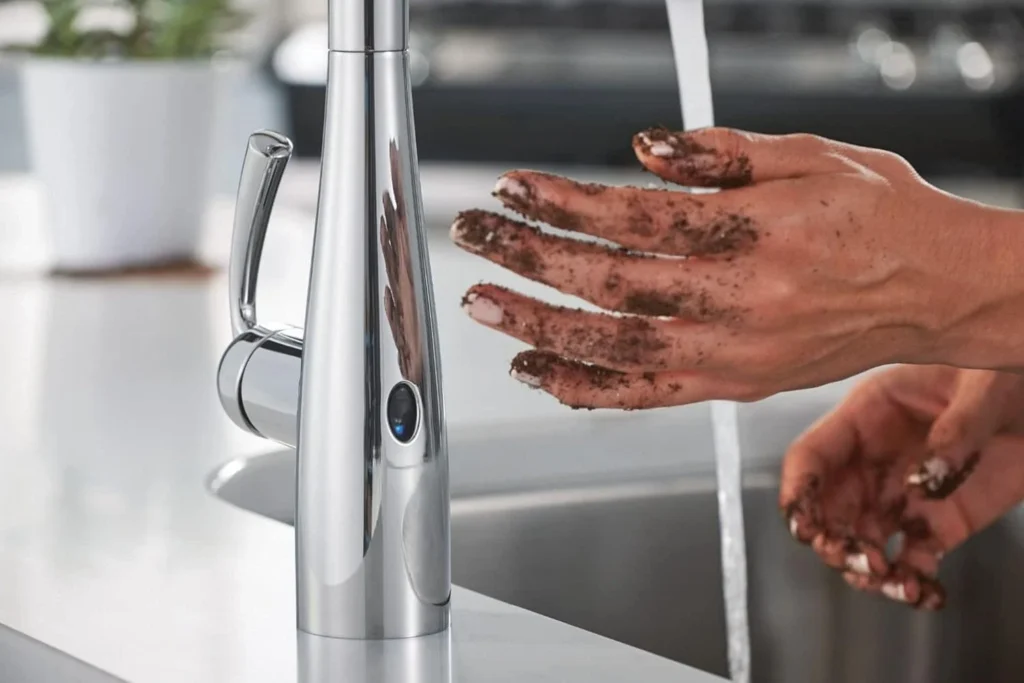
Choosing a touchless faucet goes beyond novelty; it brings tangible benefits that align with modern lifestyle priorities. First, hygiene improves dramatically because you never need to touch the faucet with dirty hands, reducing the transfer of bacteria to other surfaces. Second, water conservation is a natural side effect—many touchless models incorporate flow‑rate limiting and auto‑shutoff features that prevent water from running longer than necessary.
From a design perspective, touchless faucets often sport minimalist lines and sleek finishes that enhance the visual appeal of contemporary kitchens. They also free up countertop space by eliminating the need for bulky handles, which can be especially valuable in smaller apartments or open‑plan living areas. When paired with other modern fixtures, a touchless faucet can become a focal point that ties together your living room décor with woven décor baskets or other cohesive design elements.
Installation Considerations and Compatibility
Installing a touchless kitchen faucet is generally similar to fitting a traditional faucet, but there are a few extra steps to ensure the electronic components work correctly. Most units require a power source—either a battery pack hidden in the base or a direct AC connection via a low‑voltage transformer. If you opt for a battery‑powered model, check the manufacturer’s recommendations for battery life and replacement intervals.
Plumbing compatibility is also crucial. Touchless faucets typically use standard 1/2‑inch supply lines, but you should verify that your existing water lines can accommodate the flow‑rate specifications. In older homes, you may need to upgrade the shut‑off valves to handle the slightly higher pressure that some electronic valves demand. For those concerned about the installation process, many retailers offer professional installation services, and watching a step‑by‑step video can demystify the process.
Design Integration: Matching Your Faucet to Kitchen Aesthetics
When selecting a touchless faucet, consider how its finish, shape, and spout length will interact with your overall kitchen design. Brushed nickel and matte black finishes are popular for modern interiors, providing a subtle contrast against stainless‑steel appliances. If your kitchen features warm wood tones, a polished chrome faucet can add a reflective touch that balances the palette.
Spout height and reach are practical considerations as well. A high‑arc spout is ideal for large pots and pans, while a low‑arc design may suit a sleek, streamlined countertop. For a cohesive look, pair the faucet with coordinated hardware such as drawer pulls or cabinet knobs. To see how coordinated design elements can elevate a space, explore our article on Kohler vs Moen kitchen faucets, which highlights style matching across different brands.
Maintenance and Troubleshooting Tips
Even the most reliable touchless faucet requires occasional upkeep to maintain sensor accuracy and water flow. Regularly wiping the sensor surface with a soft, damp cloth prevents mineral buildup that can interfere with detection. For models with battery power, replace the batteries annually to avoid unexpected shutdowns.
If the faucet fails to activate, start by checking the power source and ensuring the sensor isn’t obstructed by debris. Verify that the water supply is turned on and that the solenoid valve isn’t clogged with sediment. Many manufacturers include a reset button that can clear minor electronic glitches. For persistent issues, consult the user manual or contact customer support—most reputable brands offer warranty coverage for electronic components.
How Does a Touchless Kitchen Faucet Work – Common Issues and Fixes
One frequent problem is delayed activation, often caused by low battery voltage or a dirty sensor lens. Cleaning the lens with a mild vinegar solution can restore sensitivity. Another issue is water dripping after the faucet shuts off; this typically points to a worn‑out seal in the solenoid valve, which may need replacement. Understanding these nuances empowers you to troubleshoot without immediately calling a plumber.
Quick Tips for Optimizing Your Touchless Faucet
- Adjust sensor sensitivity to match your hand motion—too high may cause false triggers.
- Place the faucet away from high‑heat zones to prevent false readings from steam.
- Use a water‑softening system if you have hard water to reduce mineral buildup on the sensor.
- Schedule an annual check‑up for the valve and battery to ensure long‑term reliability.
- Integrate the faucet with smart home systems where possible for voice‑controlled water flow.
Common Mistakes to Avoid When Choosing a Touchless Faucet
While touchless technology is appealing, certain pitfalls can diminish its benefits. Selecting a faucet solely based on price without considering sensor quality can lead to frequent malfunctions. Similarly, ignoring the power requirements—opting for a battery‑less model in a kitchen without accessible wiring—may result in costly retrofits. Finally, overlooking the faucet’s flow rate can affect both water conservation goals and user experience; a flow that’s too low may frustrate users, while an excessively high flow defeats the purpose of water saving.
Frequently Asked Questions
Can I install a touchless faucet myself?
Yes, many homeowners can install a touchless faucet with basic plumbing tools and a clear instruction manual. The process involves connecting water supply lines, securing the faucet base, and setting up the power source. If you’re uncomfortable with electrical components or have outdated plumbing, hiring a professional is advisable.
Do touchless faucets work with hot water?
Touchless faucets control water flow regardless of temperature. However, the temperature mix is set by the faucet’s internal valve or a separate temperature control knob. Some models feature a dual‑sensor system that can distinguish between hot and cold taps, but most rely on a single sensor for both.
How much water can I save with a touchless faucet?
Studies show that touchless faucets can reduce water usage by 20–30 % compared to traditional handles, primarily due to automatic shutoff after a set time and reduced over‑running. The exact savings depend on user habits and the faucet’s flow‑rate setting.
Are touchless faucets safe for children?
Yes, they are generally safe. The sensor prevents hot water from flowing unless a hand is detected, reducing the risk of accidental burns. Some models also feature a temperature limit to further protect young users.
What is the typical lifespan of a touchless faucet?
With proper maintenance, a touchless faucet can last 8–12 years. Electronic components like the sensor and controller may need replacement sooner, but many manufacturers offer extended warranties for these parts.
Integrating Touchless Faucets into a Holistic Home Décor Plan
When designing a kitchen, think of the faucet as both a functional fixture and a design statement. Pairing it with coordinated lighting—such as under‑cabinet LEDs—can accentuate its sleek lines. Consider using a backsplash that complements the faucet’s finish; a matte black tile pairs beautifully with a brushed black sensor, while a light quartz surface highlights a chrome faucet.
In open‑plan homes, a touchless faucet can serve as a visual bridge between the cooking area and adjacent living spaces. By selecting a faucet with a minimalist silhouette, you maintain a clean aesthetic that flows into the dining or lounge area. For inspiration on how cohesive design elements can transform a space, see our guide on dacor vs viking a battle of culinary titans.
Future Trends: Smart Integration and Eco‑Friendly Features
The next wave of touchless kitchen faucets will likely incorporate full smart‑home integration, allowing users to control water temperature and flow via voice assistants like Alexa or Google Assistant. Some upcoming models promise real‑time water usage monitoring, giving homeowners immediate feedback on consumption and helping to meet sustainability goals.
Eco‑friendly features such as aerators that reduce splash and advanced leak‑detection sensors are also on the horizon. These innovations aim to blend convenience with environmental responsibility, reinforcing the touchless faucet’s role as a cornerstone of modern, responsible kitchen design.
Conclusion
Understanding how a touchless kitchen faucet works empowers you to choose a model that fits both your functional needs and design aspirations. From the infrared sensor that detects your hands to the solenoid valve that controls water flow, each component plays a vital role in delivering a hygienic, water‑saving experience. By paying attention to installation requirements, maintenance routines, and aesthetic compatibility, you can enjoy the convenience of touchless technology while enhancing the overall look of your kitchen. Explore further décor ideas on The Homara and let your kitchen become a showcase of modern style and smart functionality.