
Table of Contents
- Kohler vs Moen Kitchen Faucets: Design Philosophy and Aesthetic Appeal
- Technology and Performance: What Sets the Brands Apart
- How Kohler vs Moen Kitchen Faucets Impact Water Efficiency
- Installation and Compatibility: Ease of Setup for DIY Enthusiasts
- Durability, Warranty, and After‑Sales Support
- Price Range and Value for Money
- Matching Faucets with Kitchen Styles: Real‑World Examples
- Quick Tips for Choosing Between Kohler and Moen
- Common Mistakes When Selecting a Kitchen Faucet
- Frequently Asked Questions
When it comes to designing a functional yet stylish kitchen, the faucet you choose can set the tone for the entire space. Homeowners often find themselves weighing the merits of two industry giants: Kohler and Moen. Both brands boast decades of experience, innovative technology, and a reputation for durability, but they differ in aesthetics, performance features, and price points. Understanding the subtle (and not‑so‑subtle) differences between Kohler vs Moen kitchen faucets can help you make a confident decision that aligns with your design vision, budget, and everyday needs. In this guide, we’ll break down the key attributes of each brand, explore design trends, and offer practical tips to ensure the faucet you pick becomes a seamless part of your modern kitchen narrative.
Whether you’re renovating a compact apartment kitchen or upgrading a sprawling family space, the right faucet not only delivers reliable water flow but also contributes to the overall visual harmony. Below, we dive deep into design language, technology, installation considerations, and after‑sales support, giving you a clear picture of how Kohler vs Moen kitchen faucets stack up in real‑world scenarios.
Kohler vs Moen Kitchen Faucets: Design Philosophy and Aesthetic Appeal
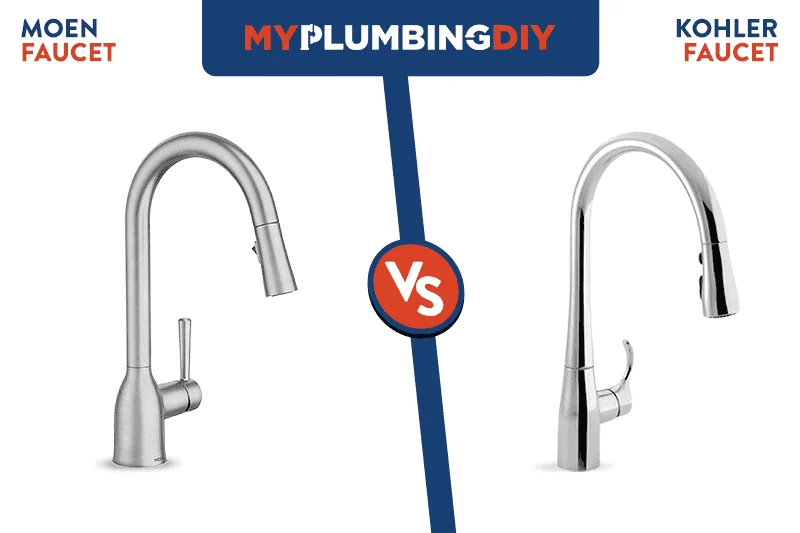
Kohler tends to emphasize bold, sculptural forms that often become a focal point of the countertop. Their collections, such as the Bellini and K-5600, feature clean lines mixed with subtle curves, appealing to homeowners who favor a contemporary yet slightly dramatic look. Moen, on the other hand, leans toward streamlined simplicity. The Arbor and Brantford series showcase understated elegance, making them ideal for minimalist or transitional kitchens.
Both brands offer finishes ranging from classic chrome and brushed nickel to matte black and oil‑rubbed bronze. If you’re aiming for a cohesive modern aesthetic, consider how the faucet finish interacts with cabinet hardware, appliances, and lighting. For example, pairing a matte black Kohler faucet with dark quartz countertops can create a striking contrast, while a polished nickel Moen model may blend seamlessly with stainless steel appliances.
- Bold, statement pieces – Kohler
- Understated, sleek designs – Moen
- Wide finish options for both brands
Design is just one piece of the puzzle; the functional aspects of Kohler vs Moen kitchen faucets often tip the scales for discerning buyers.
Technology and Performance: What Sets the Brands Apart

Kohler invests heavily in proprietary technology like the H2Ovation system, which uses a ceramic disc cartridge to deliver consistent water pressure while reducing drips. Their Touchless sensors, powered by motion detection, provide hands‑free operation—perfect for a busy cooking environment. Moen counters with the Magnetix dock, a magnetic spray‑head that clicks into place with a satisfying click, and the Power Clean aerator that increases water flow without sacrificing efficiency.
When evaluating Kohler vs Moen kitchen faucets for performance, pay attention to flow rate (measured in gallons per minute), spout reach, and spray patterns. Kohler models often feature higher arc heights, ideal for large pots, while Moen’s pull‑down sprayers excel at precision cleaning of dishes and produce a gentle mist for rinsing delicate produce.
- H2Ovation (Kohler) – drip‑free, consistent pressure
- Magnetix (Moen) – easy‑release spray head
- Touchless vs. traditional pull‑down options
How Kohler vs Moen Kitchen Faucets Impact Water Efficiency
Both brands have embraced WaterSense certification, but they approach efficiency differently. Kohler’s EcoBoost technology reduces water usage by up to 20% without compromising performance, making it an excellent choice for eco‑conscious homeowners. Moen’s Aerator+ inserts tiny bubbles into the water stream, maintaining strong pressure while using less water. In practice, the difference in water bills between the two is often marginal, but the feel of water flow can sway user preference.
Installation and Compatibility: Ease of Setup for DIY Enthusiasts

Installation can be a make‑or‑break factor when comparing Kohler vs Moen kitchen faucets. Moen generally scores higher for DIY friendliness thanks to their comprehensive instruction manuals and universal mounting kits that accommodate single‑hole, centerset, and widespread configurations. Kohler faucets sometimes require additional adapters, especially for specialty finishes or high‑arc spouts.
For renters or those who prefer a quick swap, Moen’s Snap‑Fit mounting system allows the faucet to be secured without extensive plumbing modifications. Kohler’s premium models, while stunning, may call for a professional plumber to ensure proper sealing and alignment, especially when integrating advanced features like touchless sensors.
- Moen – DIY‑ready kits, universal compatibility
- Kohler – May need adapters, professional installation for high‑end lines
- Both support single‑hole, centerset, widespread setups
Understanding these nuances can save you time, money, and frustration during the renovation process.
Durability, Warranty, and After‑Sales Support
Long‑term reliability is crucial when assessing Kohler vs Moen kitchen faucets. Kohler offers a limited lifetime warranty on many of its finishes and a 10‑year warranty on internal components. Their customer service is known for quick parts replacement, especially for ceramic disc cartridges. Moen provides a limited lifetime warranty on finishes and a 10‑year warranty on internal parts as well, but they also throw in a “One‑Year Leak Warranty” that covers any leakage issues within the first year of use.
Both companies have extensive dealer networks, but Moen’s online support portal includes video tutorials and a live chat feature that can be especially helpful for first‑time installers. Kohler’s website offers a virtual design tool, allowing you to visualize the faucet within your kitchen layout before purchase.
- Kohler – Lifetime finish warranty, strong parts coverage
- Moen – One‑Year Leak Warranty, robust online resources
- Both provide responsive customer service
Price Range and Value for Money
Budget considerations often dictate the final decision in the Kohler vs Moen kitchen faucets debate. Kohler’s mid‑range models typically fall between $150 and $300, while high‑end designs can exceed $500, especially those featuring touchless technology or premium finishes. Moen offers a broader spectrum of affordable options, with many reliable models priced under $150, and premium collections ranging from $250 to $400.
If you’re looking for a balance of style, technology, and cost, Moen’s U‑Series offers high‑arc spouts and magnetic docking at a modest price point. Meanwhile, Kohler’s Viva line provides sophisticated design and advanced features for those willing to invest a bit more. Remember, a higher upfront cost can translate to longer durability and fewer repairs, ultimately offering better value over the life of the faucet.
- Kohler – $150–$500+, premium finishes and tech
- Moen – $80–$400, wide range for every budget
- Consider long‑term maintenance costs
Matching Faucets with Kitchen Styles: Real‑World Examples
To illustrate how Kohler vs Moen kitchen faucets complement various design schemes, let’s explore three real‑world scenarios:
- Urban Loft: Exposed brick, concrete countertops, and industrial lighting pair beautifully with a matte black Kohler faucet. Its sculptural silhouette adds a bold accent without overwhelming the space.
- Scandinavian Minimalist: Light wood cabinets, white quartz, and soft pendant lighting benefit from a brushed nickel Moen faucet. The clean lines reinforce the airy, uncluttered feel.
- Traditional Farmhouse: Warm shaker cabinets and a farmhouse sink are enhanced by a polished chrome Kohler model with a classic pull‑down sprayer, bridging classic charm with modern functionality.
These examples demonstrate that the right choice between Kohler vs Moen kitchen faucets hinges not only on brand reputation but also on how each model interacts with your unique interior narrative.
Quick Tips for Choosing Between Kohler and Moen
- Identify your primary need: high‑arc spout for large pots (Kohler) or magnetic spray head for ease of use (Moen).
- Check compatibility with your sink configuration—single‑hole, centerset, or widespread.
- Consider finish durability; matte finishes may show fingerprints less than polished chrome.
- Factor in installation skill level; Moen typically offers more DIY‑friendly options.
- Review warranty details to ensure long‑term peace of mind.
Common Mistakes When Selecting a Kitchen Faucet
Even seasoned renovators can stumble when evaluating Kohler vs Moen kitchen faucets. Here are a few pitfalls to avoid:
- Focusing solely on aesthetics. While looks matter, ignoring flow rate and spray functionality can lead to daily frustrations.
- Overlooking sink compatibility. A high‑arc faucet may look stunning, but if your sink has limited clearance, it could cause splashing.
- Neglecting water pressure considerations. In homes with low water pressure, certain high‑tech models may not perform optimally.
- Skipping warranty review. Some discounts void warranty coverage; always read the fine print.
By staying mindful of these issues, you can ensure a smoother selection process and a faucet that truly serves your kitchen’s needs.
Frequently Asked Questions
Which brand offers better water‑saving technology?
Both Kohler and Moen feature WaterSense‑certified models, but Kohler’s EcoBoost and Moen’s Aerator+ each reduce consumption in slightly different ways. Choose based on whether you prioritize pressure consistency (Kohler) or aerated flow (Moen).
Are touchless faucets worth the extra cost?
Touchless technology, found primarily in Kohler’s premium lines, adds convenience and hygiene, especially in high‑traffic kitchens. If you value hands‑free operation and are comfortable with the higher price, it can be a worthwhile upgrade.
Can I install a Kohler faucet myself?
Many Kohler models are installable by confident DIYers, but some high‑end designs may require adapters or professional plumbing to ensure proper sealing and sensor alignment.
Do Moen faucets require special maintenance?
Moen’s ceramic disc cartridges are low‑maintenance, but the magnetic spray head should be cleaned periodically to prevent mineral buildup, especially in hard‑water areas.
Which brand holds up better in a busy family kitchen?
Both brands are built for durability, yet Moen’s robust warranty and easy‑replace parts make it a pragmatic choice for high‑use environments, while Kohler’s premium finishes may better resist wear in a design‑focused setting.
Is there a noticeable price difference for comparable models?
Generally, Moen offers more budget‑friendly options, while Kohler’s comparable models often sit at a higher price point due to design emphasis and advanced features.
For a deeper dive into selecting the right hardware, see our guide on how to grind down self leveling compound. If you’re also exploring furniture comfort, our comparison of Barcalounger vs Flexsteel offers useful insights. And for those wanting to finish a kitchen remodel with style, check out minimalist wall décor ideas that pair beautifully with sleek faucet finishes.
Choosing the right faucet is more than a functional decision; it’s an opportunity to express personal style, enhance everyday convenience, and protect your investment for years to come. By weighing design, technology, installation, and cost, you’ll find the perfect balance in the Kohler vs Moen kitchen faucets debate and create a kitchen that truly reflects your home’s character.