
Table of Contents
- Understanding the Core Technology: Touch vs Touchless Kitchen Faucet
- Design Aesthetics: How Each Faucet Shapes Kitchen Style
- Touch vs Touchless Kitchen Faucet: Material and Finish Considerations
- Hygiene and Health Benefits
- Water Efficiency and Sustainability
- Installation and Compatibility
- Cost Considerations: Budgeting for Your Faucet Choice
- Maintenance and Longevity
- Quick Tips for Choosing the Right Faucet
- Common Mistakes to Avoid When Selecting a Faucet
- Frequently Asked Questions
- Integrating Your Faucet Choice with Overall Kitchen Design
- Final Thoughts on Touch vs Touchless Kitchen Faucet Selection
Touch vs Touchless Kitchen Faucet – Which Is Right for Your Home
When it comes to modernizing your kitchen, the faucet you choose can be more than just a functional fixture—it can be a statement of style, hygiene, and convenience. The debate between a traditional touch‑activated faucet and a hands‑free, sensor‑driven touchless model has become a central conversation among homeowners, designers, and tech enthusiasts alike. Understanding the nuances of each option helps you decide which solution aligns with your daily routines, aesthetic preferences, and long‑term maintenance plans.
In this article, we’ll explore the core differences between a touch faucet and a touchless kitchen faucet, weigh their pros and cons, and provide practical guidance on installation, usage, and care. Whether you’re renovating a compact apartment kitchen or upgrading a spacious family hub, the insights here will equip you with the knowledge to make an informed choice that complements both function and modern home décor.
Understanding the Core Technology: Touch vs Touchless Kitchen Faucet
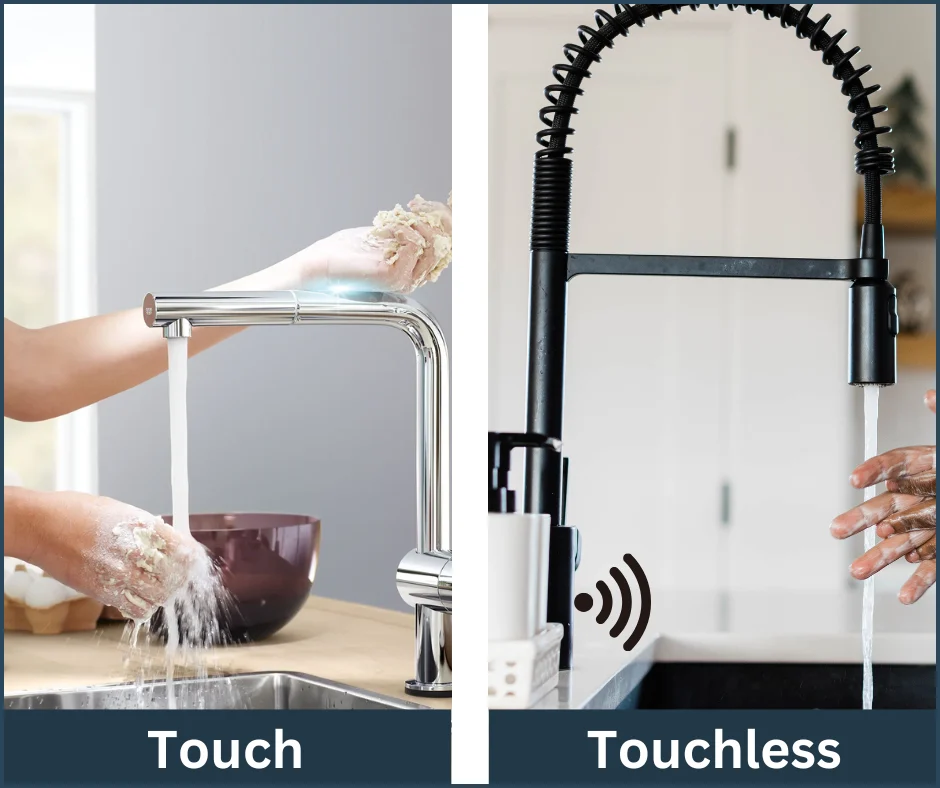
The primary distinction lies in how the faucet is activated. A touch faucet uses an electrical sensor embedded in the spout; a simple tap on the metal surface completes a circuit, opening the valve. In contrast, a touchless kitchen faucet relies on infrared or ultrasonic sensors that detect hand movement within a set distance, allowing water flow without any physical contact.
Both systems eliminate the need for a traditional knob, but they differ in user interaction, power requirements, and integration with other smart home features. Knowing these fundamentals sets the stage for deeper evaluation of performance, aesthetics, and sustainability.
Design Aesthetics: How Each Faucet Shapes Kitchen Style

From a design perspective, the choice between touch and touchless kitchen faucet can influence the visual language of your space. Touch faucets often feature sleek, minimalist lines that blend seamlessly with contemporary cabinetry, offering a subtle high‑tech vibe without drawing too much attention.
Touchless models, however, tend to be a focal point. The sensor pad or illuminated ring can become a design element, especially when paired with matte black finishes or brushed brass that echo industrial trends. For homeowners who love modern sink materials, pairing a touchless faucet with a contrasting sink can enhance visual depth and reinforce a forward‑thinking aesthetic.
Touch vs Touchless Kitchen Faucet: Material and Finish Considerations
- Metal Choices: Chrome, stainless steel, and brushed nickel work well for both, but matte black or oil‑rubbed bronze can add drama to a touchless unit.
- Finish Durability: Touch faucets may show fingerprints more prominently, while touchless models often incorporate anti‑smudge coatings.
- Integration with Backsplashes: Consider a backsplash with integrated LED lighting to complement the sensor glow of a touchless faucet.
Hygiene and Health Benefits

One of the strongest arguments for a touchless kitchen faucet is the reduction of bacterial transfer. By eliminating the need to grip a handle, you minimize contact points that can harbor germs—an especially valuable feature in households with young children or elderly members.
Touch faucets still require a brief contact, but the brief electrical activation can be less messy than turning a traditional knob. If you prioritize a hands‑free experience for food prep, dishwashing, or cleaning, the touchless option provides an extra layer of cleanliness without sacrificing flow control.
Water Efficiency and Sustainability
Both touch and touchless kitchen faucet models often incorporate flow‑restricting aerators and smart timers, but touchless systems typically excel in water savings. Sensors can be programmed to shut off after a set period, preventing accidental runoff when hands linger under the stream.
When evaluating sustainability, consider the faucet’s WaterSense rating—a U.S. Environmental Protection Agency (EPA) certification that indicates at least 20% water savings over standard models. Many touchless faucets achieve higher efficiency scores because they can precisely control the duration of water flow.
Installation and Compatibility
Installing a touch faucet usually follows a straightforward process similar to traditional models: connect the water lines, secure the mounting hardware, and integrate the power source (often a battery pack). Touchless kitchen faucet installations may require additional steps, such as routing a power cable or ensuring adequate sensor clearance.
Before purchasing, verify that the faucet’s mounting size matches your existing sink’s pre‑drilled holes (typically 4-inch or 3.5‑inch configurations). If you’re planning a major remodel, you might also explore countertop mounting options that free up space beneath the sink for cleaner lines.
Cost Considerations: Budgeting for Your Faucet Choice
Price points vary widely. Basic touch faucets can start around $80, while premium touchless models with advanced sensors and LED indicators may exceed $250. Keep in mind that the upfront cost is only part of the equation; long‑term savings from reduced water usage and lower maintenance can offset the higher initial investment.
When budgeting, also factor in potential installation fees if you’re not DIY‑inclined. Some retailers offer free installation promotions for higher‑end models, which can be a worthwhile perk.
Maintenance and Longevity
Both faucet types require routine cleaning to prevent mineral buildup, especially in hard‑water regions. Touchless kitchen faucets often feature removable sensor covers for easy cleaning, while touch faucets may need occasional battery replacement (typically lasting 6‑12 months).
For longevity, choose a faucet with ceramic disc cartridges—these provide smoother operation and are less prone to wear compared to rubber washers. Regularly descaling the aerator and wiping down the sensor area with a soft cloth will keep performance optimal.
Quick Tips for Choosing the Right Faucet
- Assess your kitchen’s traffic: High‑use areas benefit from touchless technology.
- Match the finish to existing hardware for a cohesive look.
- Check for WaterSense certification to ensure water efficiency.
- Consider power source options—battery‑powered touchless units offer flexibility.
- Read user reviews focusing on sensor reliability and durability.
Common Mistakes to Avoid When Selecting a Faucet
One frequent error is overlooking the sensor’s range. Placing a touchless faucet too close to a backsplash or cabinet can interfere with activation. Additionally, buyers sometimes ignore the need for compatible mounting sizes, leading to costly retrofits.
Another pitfall is neglecting the aesthetic impact. A touchless faucet with a bold LED ring can clash with a minimalist kitchen if not thoughtfully integrated. Take the time to visualize the faucet within your overall design scheme before committing.
Frequently Asked Questions
Can a touch faucet work with low‑voltage power supplies?
Yes, most touch faucets operate on low‑voltage DC power, either from batteries or a 12‑V adapter, making them safe for kitchen environments.
Do touchless kitchen faucets need a constant power source?
Many models use rechargeable batteries that last up to a year, while others can be hard‑wired to a nearby outlet. Choose the option that fits your installation constraints.
Is there a noticeable difference in water pressure between touch and touchless faucets?
Water pressure is primarily determined by the faucet’s internal valve and the home’s plumbing. Both types can deliver comparable pressure when equipped with high‑quality cartridges.
How do I clean the sensor on a touchless faucet?
Wipe the sensor with a damp, non‑abrasive cloth. For stubborn stains, a mild vinegar solution works well, but avoid harsh chemicals that could damage the sensor coating.
Can I integrate a smart touchless faucet with my home automation system?
Some premium models offer Wi‑Fi or Bluetooth connectivity, allowing you to set timers, monitor usage, and receive maintenance alerts through a companion app.
Integrating Your Faucet Choice with Overall Kitchen Design
When planning a cohesive kitchen remodel, think beyond the faucet. Pairing a touchless kitchen faucet with entryway décor ideas that emphasize sleek lines can create a unified modern feel throughout the home. Similarly, coordinating faucet finishes with cabinet hardware, lighting fixtures, and even the dishwasher—such as the Cove vs Miele dishwasher—ensures visual harmony.
For those interested in eco‑friendly solutions, combine a touchless faucet with a high‑efficiency dishwasher and a water‑saving sink to maximize sustainability. The synergy between these elements can significantly reduce water consumption while maintaining a stylish, functional kitchen environment.
In addition, consider the placement of the faucet relative to the sink’s bowl. A high‑arc spout works well with deep, fireclay or granite composite sinks, providing ample clearance for large pots. For compact countertops, a low‑profile touch faucet can save valuable space without sacrificing performance.
Final Thoughts on Touch vs Touchless Kitchen Faucet Selection
Choosing between a touch faucet and a touchless kitchen faucet ultimately hinges on your lifestyle, design goals, and budget. Touch faucets deliver a subtle high‑tech upgrade with minimal installation hassle, while touchless models elevate hygiene, water efficiency, and futuristic appeal. By evaluating the factors discussed—technology, aesthetics, hygiene, sustainability, installation, cost, and maintenance—you can select a faucet that not only meets functional needs but also enhances the overall décor narrative of your kitchen.
Remember, the right faucet is more than a plumbing component; it’s a design statement that reflects modern living standards. Take the time to explore reputable brands, read user experiences, and envision how the faucet will interact with your existing kitchen elements. With thoughtful selection, your new faucet will serve as a reliable, stylish centerpiece for years to come.