
Table of Contents
- onyx vs tile shower: Aesthetic Comparison
- onyx vs tile shower: Practical Considerations
- Installation and Maintenance: onyx vs tile shower
- Cost and Value: onyx vs tile shower
- Design Flexibility and Styling Ideas
- onyx vs tile shower: Key Design Tips
- Quick Home Décor Tips
- Common Mistakes to Avoid
- Frequently Asked Questions
- Is onyx suitable for daily use in a family bathroom?
- How often should I reseal an onyx shower?
- Can I install heated flooring beneath onyx?
- What is the best grout type for tile showers?
- Does onyx require a special type of sealant?
- Which material is more eco‑friendly?
Onyx vs Tile Shower: Choosing the Perfect Material for Your Bathroom Retreat
When it comes to creating a spa‑like sanctuary at home, the shower often becomes the centerpiece. Homeowners are torn between the timeless appeal of ceramic or porcelain tiles and the dramatic, luminous allure of natural onyx. Both materials promise a different visual experience, maintenance routine, and price point, making the decision far from trivial.
In this guide we’ll walk through every angle of the onyx vs tile shower debate. From aesthetic impact and tactile feel to installation challenges and long‑term value, you’ll gain a clear picture of which choice aligns with your lifestyle, design vision, and budget. By the end, you’ll feel confident selecting the material that transforms your bathroom into a personal oasis.
onyx vs tile shower: Aesthetic Comparison

The first thing anyone notices in a bathroom is the visual language of the shower enclosure. Onyx, a semi‑precious stone, offers a natural veining pattern that changes hue with the direction of light. When backlit or exposed to steam, its translucency creates a soft glow, almost like an underwater cave. Tile, on the other hand, provides a more controlled canvas. With countless sizes, finishes, and colors—glossy, matte, patterned, or textured—tiles allow you to design a precise motif, from classic subway grids to bold geometric mosaics.
When you compare onyx vs tile shower aesthetics, think about the mood you want to set. Onyx whispers luxury, depth, and a sense of rarity. Tile whispers versatility, consistency, and the ability to match other bathroom fixtures. For a modern, minimalist bathroom, a large‑format, matte‑finished onyx slab can become a single‑statement piece, while a tile shower can be broken up into zones—one wall of large marble‑look tiles, another of small, textured mosaics—to add visual interest without overwhelming the space.
onyx vs tile shower: Practical Considerations
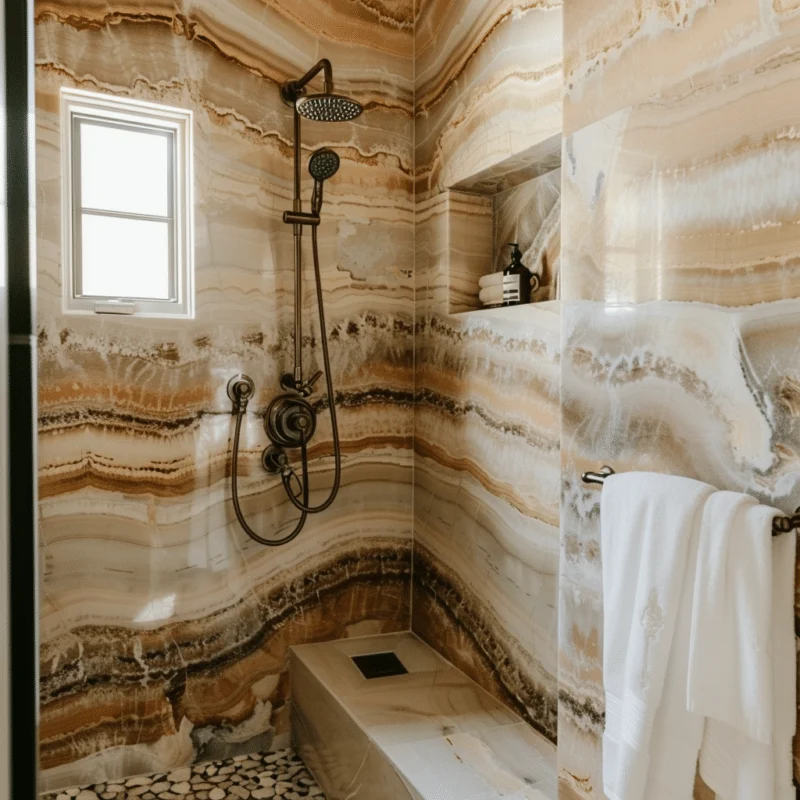
Beyond beauty, practicality dictates daily satisfaction. Onyx is a softer stone (about 6–7 on the Mohs scale) compared to porcelain tile (7–8). This means it can be prone to scratching or chipping if abrasive cleaners or heavy objects are used. However, modern sealants dramatically improve resistance to stains and water penetration, extending its lifespan when properly maintained.
Tile showers excel in durability. High‑quality porcelain can withstand years of foot traffic, heavy usage, and even accidental impacts. Grout lines, however, can become a maintenance headache—mold, discoloration, and cracking may appear if not sealed regularly. Choosing large format tiles reduces the number of grout lines, narrowing the maintenance gap between tile and onyx.
When evaluating onyx vs tile shower practicality, consider the occupants: families with children, frequent guests, or pets may benefit from tile’s resilience, while a master bathroom used primarily for relaxation can afford the delicate charm of onyx.
Installation and Maintenance: onyx vs tile shower

Installation techniques differ markedly between these two materials. Onyx typically arrives as full slabs or sizable panels, requiring a professional stone fabricator to cut and polish each piece to exact dimensions. The substrate must be perfectly level, and a waterproof membrane is essential to prevent water seepage behind the stone. Because onyx is heavy, structural reinforcement may be necessary, adding to labor costs.
Tile installation is more modular. A skilled tiler can work with a range of sizes—from 4×4 inches to 24×24 inches—laying each piece with mortar and setting grout between them. While this process can be time‑consuming, it’s generally more forgiving than the precise cuts demanded by onyx. Moreover, tile installation permits on‑site adjustments, making it suitable for irregular walls or corners.
Maintenance routines also diverge. Onyx requires periodic resealing (usually every 12–18 months) to preserve its water resistance and prevent etching. Gentle, pH‑neutral cleaners are a must. Tile, conversely, needs routine grout cleaning and occasional resealing of the grout lines, but the tiles themselves are virtually maintenance‑free. For homeowners seeking low‑effort upkeep, tile may have the edge, yet the ritual of sealing onyx can become part of a mindful self‑care routine.
Cost and Value: onyx vs tile shower
Budget is often the decisive factor. Onyx, being a natural stone, commands a premium price per square foot, especially when sourced from reputable quarries and finished with high‑gloss polish. Installation costs rise further due to specialized labor, cutting tools, and necessary reinforcement. Tile, by contrast, spans a broad price spectrum—from budget‑friendly ceramic options to high‑end designer porcelains—offering flexibility for various financial plans.
Long‑term value, however, isn’t solely about upfront expense. Onyx installations can increase a home’s resale appeal, signaling luxury and uniqueness to potential buyers. Tile installations, especially with timeless patterns, also retain value and can be updated more easily by swapping out tile or regrouting. When weighing onyx vs tile shower cost, factor in not just material price, but also lifespan, resale impact, and the emotional return of daily enjoyment.
Design Flexibility and Styling Ideas
Both onyx and tile can be integrated into a cohesive bathroom design, but each offers distinct styling pathways. Below are several ideas to inspire you, whether you lean toward onyx or tile.
onyx vs tile shower: Key Design Tips
- Backlighting for Onyx: Install LED strips behind the onyx panels to accentuate its translucence. The gentle glow becomes a nighttime feature that rivals a spa.
- Mix Materials: Pair an onyx accent wall with tile on the remaining sides. This hybrid approach balances drama with practicality.
- Large‑Format Tiles: Choose 12×24 inch porcelain tiles with a marble‑look finish to emulate the look of natural stone while keeping grout lines minimal.
- Pattern Play: Use a bold, geometric tile pattern on the floor and keep shower walls simple, or vice versa, to guide visual focus.
- Integrated Niches: Carve shallow niches into onyx slabs for storing toiletries; tile niches can be tiled in complementary colors for a seamless look.
For further inspiration on how to blend striking elements into your bathroom, explore our guide on modern wall décor with canvas sets. The same principles of balance and focal points apply to both onyx and tile environments.
Another design angle involves contrasting textures. Pair smooth onyx with a rough‑hewn wood vanity for an earthy, organic feel, or combine glossy tile with matte black fixtures for an industrial chic vibe. The choice between onyx vs tile shower ultimately hinges on the narrative you want your bathroom to tell.
Quick Home Décor Tips
- Use a handheld steamer to clean grout without harsh chemicals—great for maintaining tile shine.
- Apply a silicone‑based sealant to onyx edges to prevent water infiltration.
- Introduce a pop of color with a vibrant shower curtain or towel set to soften the stone’s cool tones.
- Install a rain‑shower head positioned to highlight the onyx’s reflective qualities.
- Choose fixtures in brushed nickel or matte black to complement either material’s aesthetic.
Common Mistakes to Avoid
Even seasoned renovators can stumble when navigating the onyx vs tile shower decision. Here are pitfalls and how to sidestep them:
- Neglecting Substrate Preparation: Skipping a waterproof membrane under onyx can lead to costly leaks. Ensure the base is perfectly flat and sealed.
- Using Abrasive Cleaners on Onyx: Harsh chemicals will dull the stone’s natural sheen. Stick to pH‑neutral solutions and a soft cloth.
- Choosing Incompatible Grout Colors: Dark grout on light tile can create a heavy look. Opt for grout that harmonizes with the tile tone.
- Underestimating Weight: Onyx slabs are heavy; verify that wall studs can support the load or add additional framing.
- Skipping Professional Installation: DIY tile work can look polished, but misaligned joints or uneven mortar can diminish the overall impact.
Frequently Asked Questions
Is onyx suitable for daily use in a family bathroom?
Onyx can handle daily use if properly sealed and maintained, but its softer nature means it’s more susceptible to scratches. For high‑traffic family bathrooms, many homeowners prefer tile for its resilience, reserving onyx for master suites or guest baths where aesthetics outweigh heavy wear.
How often should I reseal an onyx shower?
Most experts recommend resealing onyx every 12–18 months, depending on the sealant brand and shower usage. Regular resealing preserves water resistance and keeps the stone’s natural luster intact.
Can I install heated flooring beneath onyx?
Yes, radiant floor heating works well under onyx, provided the substrate is level and a proper waterproofing membrane is installed. The heat enhances the stone’s comfort and can accentuate its natural warmth.
What is the best grout type for tile showers?
Epoxy grout offers superior stain resistance and durability compared to traditional cement grout, though it’s more expensive and harder to work with. For most residential tile showers, a high‑quality polymer‑modified cement grout strikes a good balance of performance and ease of application.
Does onyx require a special type of sealant?
Stone‑specific penetrating sealants are ideal for onyx, as they allow the stone to breathe while protecting against water and oil penetration. Avoid surface‑film sealants that can create a glossy, slippery finish.
Which material is more eco‑friendly?
Tile made from recycled porcelain or reclaimed ceramic can be very sustainable. Onyx, being a natural stone, involves quarrying impacts, but if sourced responsibly and used for a long lifespan, its environmental footprint can be comparable. Look for certifications such as LEED or Eco‑Stone for greener choices.
Choosing between onyx vs tile shower ultimately reflects personal priorities—whether you value dramatic visual impact, ease of maintenance, budget flexibility, or long‑term resale value. By weighing aesthetic desires against practical realities, you can design a shower that not only meets functional needs but also elevates your entire bathroom experience.
Ready to dive deeper into home styling? Check out our comparison of Riccar vs Miele Upright for insights on selecting premium appliances that complement your bathroom design. Also, explore storage solutions with our elfa vs pax 2 – In‑Depth Comparison to keep toiletries organized without compromising style.
Whichever path you choose—onyx’s luminous grandeur or tile’s dependable versatility—your shower will become a hallmark of personal comfort and sophisticated design. Embrace the journey, plan meticulously, and enjoy the transformation of your bathroom into a sanctuary that reflects your unique taste.