
Table of Contents
- Minimalist Gallery Wall Ideas: The Fundamentals
- Minimalist Gallery Wall Ideas – Choosing the Right Artwork
- Creating Balance with Symmetry and Asymmetry
- Color Palette Strategies for a Clean Look
- Mixing Media While Keeping It Minimal
- Small Spaces: Gallery Walls That Don’t Overwhelm
- DIY Installation Tips for a Flawless Finish
- Quick Tips for Minimalist Gallery Wall Success
- Common Mistakes and How to Avoid Them
- Frequently Asked Questions
- Putting It All Together
Minimalist Gallery Wall Ideas: Fresh Inspiration for Modern Spaces
When it comes to modern home styling, a well‑curated gallery wall can become the visual centerpiece of any room without demanding a lot of space or ornamentation. The appeal of minimalist gallery wall ideas lies in their ability to showcase personality while keeping the overall aesthetic clean, calm, and deliberately uncluttered. Whether you’re decorating a compact apartment, a spacious living room, or a tranquil bedroom, the right approach can turn a blank stretch of wall into a sophisticated storytelling canvas.
In this guide we’ll walk you through the essential principles behind minimalist gallery wall design, share layout strategies that work in various room types, and provide hands‑on tips for mixing media, choosing colour palettes, and hanging art like a pro. You’ll also find quick actionable ideas, common pitfalls to avoid, and answers to the most frequently asked questions, all aimed at helping you create a gallery wall that feels both personal and polished.
Minimalist Gallery Wall Ideas: The Fundamentals
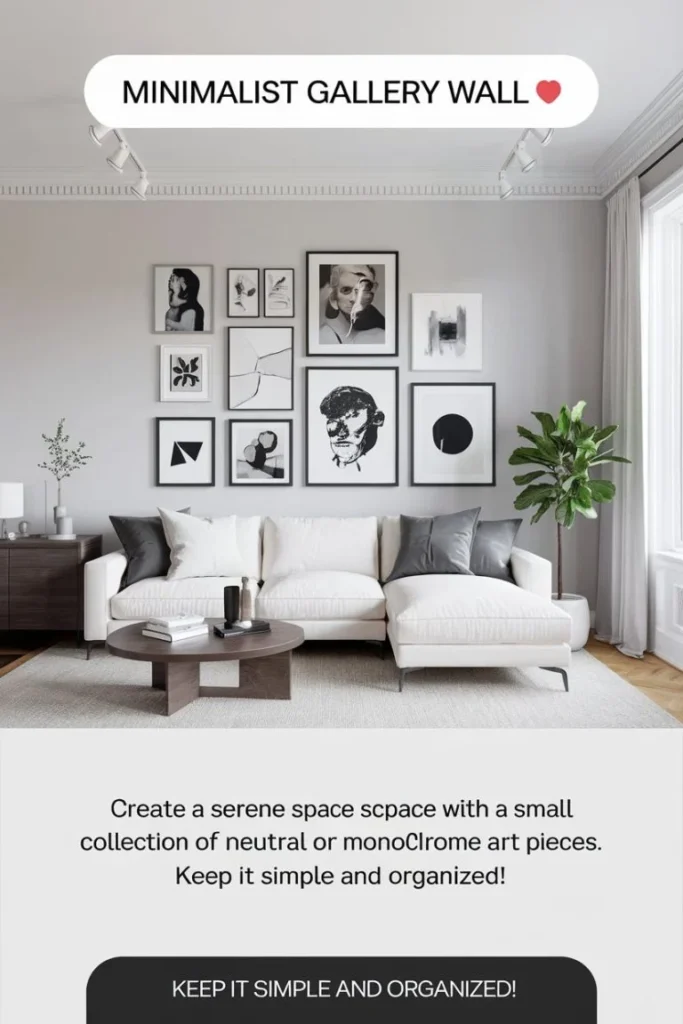
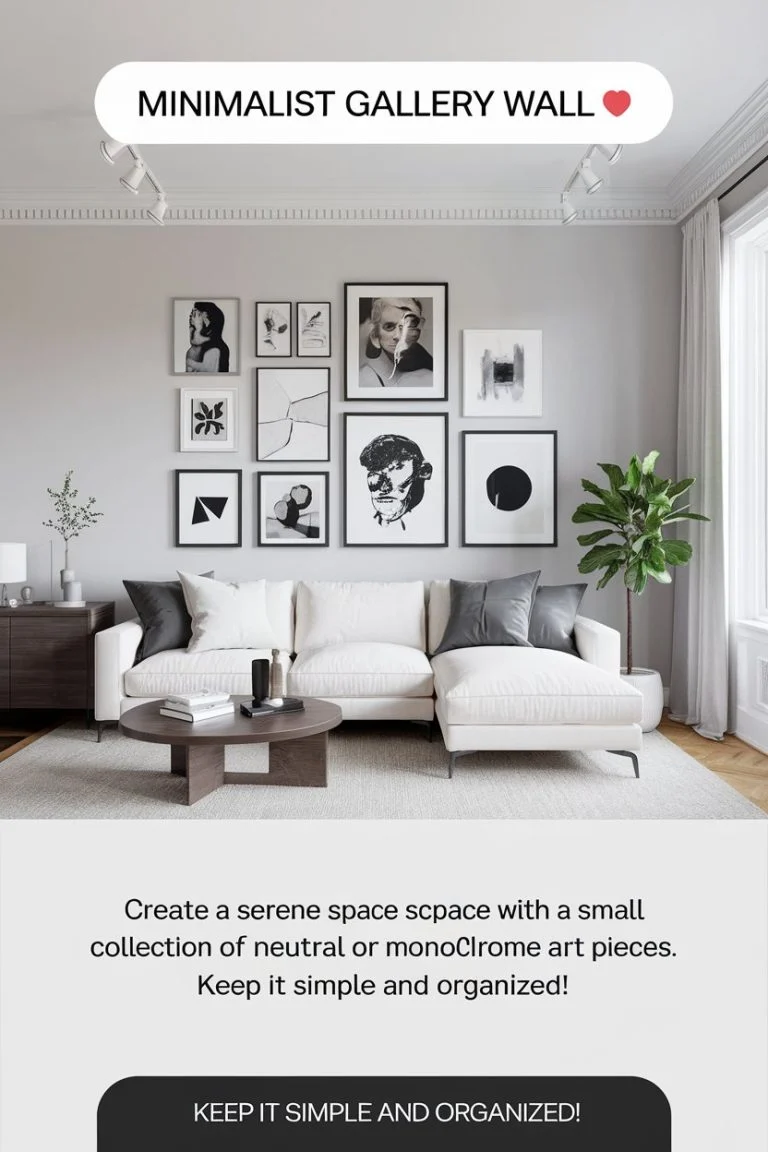
Before you start drilling holes, it helps to understand the core philosophy behind minimalist gallery wall ideas. The goal is to let each piece breathe, allowing negative space to become an active design element. This means selecting a limited number of artworks or photographs, often with a unified colour scheme or theme, and arranging them in a way that feels intentional rather than random.
Start by defining the wall’s purpose. Is it meant to be a focal point, a subtle backdrop, or a transitional element between zones? Once you have that answer, choose frames that share a common material—black metal, natural wood, or sleek white—and keep the matting simple. A cohesive frame choice unifies disparate pieces, reinforcing the minimalist aesthetic.
Minimalist Gallery Wall Ideas – Choosing the Right Artwork
Artwork selection is where personality meets restraint. Look for pieces that echo the room’s existing colour palette or introduce a single accent hue. Black‑and‑white photography, abstract line drawings, and muted botanical prints work especially well in a minimal setting. If you love colour, opt for one bold piece and let the surrounding works stay neutral, creating a visual anchor without overwhelming the eye.
When you have a collection of images, consider their scale. A mix of small (8‑10 inches) and medium (12‑16 inches) frames can add depth, but avoid overly large pieces that dominate the wall unless the intent is a single‑statement gallery.
- Choose art with a shared visual language—similar line weight, colour tones, or subject matter.
- Limit the number of frames to 5‑9 for most walls; more can feel busy.
- Use matte finishes to reduce glare and maintain a calm vibe.
Creating Balance with Symmetry and Asymmetry

One of the most rewarding challenges in minimalist gallery wall ideas is finding the right balance between order and playfulness. Symmetrical arrangements—where frames are mirrored on either side of a central point—instantly convey stability and formality, making them ideal for formal living rooms or entryways.
Asymmetrical layouts, on the other hand, add a contemporary edge while still adhering to minimal principles. The secret is to maintain visual equilibrium by aligning the outer edges of the grouping or using an invisible grid as a guide. For example, you might cluster three small frames on one side and offset a larger piece on the opposite side, ensuring the overall “weight” feels evenly distributed.
For a practical illustration, see how a minimalist living room corner shelf can serve as a subtle anchor for an asymmetrical gallery wall, providing a visual tie‑in that keeps the composition grounded.
Color Palette Strategies for a Clean Look
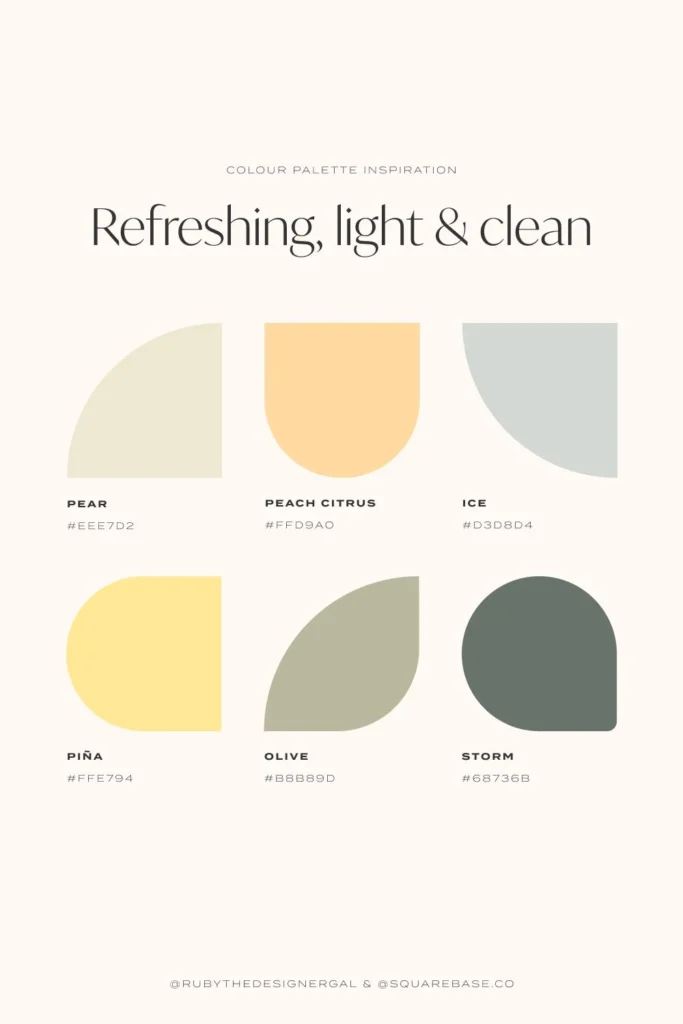
Colour is a silent communicator in minimalist gallery wall ideas. A restrained palette helps the eye rest and allows each artwork to speak. Neutral tones—soft whites, warm greys, and muted beiges—form an excellent backdrop. If you wish to introduce colour, do so sparingly: perhaps a single frame in a deep navy or a subtle pastel mat.
When incorporating colour, consider the room’s existing hues. A living room with teal accents could benefit from a gallery wall featuring artwork with a hint of teal in the composition, creating a cohesive flow without over‑matching.
- Stick to two‑tone palettes for maximum impact.
- Use a single accent colour for frames or matting to draw focus.
- Match the wall colour with surrounding furniture for seamless integration.
Mixing Media While Keeping It Minimal
Minimalist gallery wall ideas aren’t limited to paper prints. Introducing texture through mixed media—such as a thin wooden board, a metal sculpture, or a woven tapestry—adds depth while staying true to a minimalist ethos. The key is to keep each element lightweight and maintain a uniform visual rhythm.
A great example of mixing media without compromising minimalism can be seen in kitchen wall décor with wooden boards. By pairing sleek frames with a narrow reclaimed‑wood strip, the wall gains subtle warmth and a tactile dimension that compliments the surrounding décor.
Small Spaces: Gallery Walls That Don’t Overwhelm
In apartments or narrow hallways, a sprawling gallery can feel oppressive. For small spaces, minimalist gallery wall ideas emphasize restraint and proportion. Choose a vertical arrangement of three to four frames to draw the eye upward, creating an illusion of height without crowding the wall.
If you’re working with a hallway, a linear layout of uniformly spaced frames can guide foot traffic while adding visual interest. Pairing the gallery with a narrow hallway shelf décor provides a functional display that keeps the wall from looking empty.
Another practical tip is to use floating frames—frames without visible borders—that blend into the wall colour, making the overall composition appear lighter and more spacious.
DIY Installation Tips for a Flawless Finish
Even the most thoughtfully curated minimalist gallery wall ideas can fall flat if the installation is uneven. Here’s a step‑by‑step approach to ensure a professional look:
- Measure twice, drill once. Use a tape measure and a level to map out the exact centre of your wall. Mark the top centre point of each frame with a light pencil.
- Create a paper template. Cut out paper circles or rectangles matching each frame’s size. Tape them to the wall in the desired layout; step back and adjust until the composition feels balanced.
- Choose the right hardware. For lightweight frames, simple picture hooks work. For larger pieces, consider wall anchors that can support extra weight.
- Hang from the top. Position hooks so the top of each frame aligns with the template marks; this maintains consistent spacing.
- Level and step back. Use a spirit level to ensure each piece is straight, then step back to view the overall effect.
For a compact work‑from‑home environment, look at small workspace lighting inspiration to add subtle illumination that highlights your gallery without creating glare.
Quick Tips for Minimalist Gallery Wall Success
- Limit the colour palette to two or three hues for a cohesive look.
- Use identical frames or matching finishes to unify disparate artworks.
- Incorporate negative space deliberately; a wall isn’t a collage, it’s a composition.
- Start with a paper layout on the floor before committing to the wall.
- Consider the room’s function—choose calming images for bedrooms, bold statements for living areas.
Common Mistakes and How to Avoid Them
Over‑crowding the wall. Adding too many pieces defeats the minimalist goal. Stick to a curated selection and let each item breathe.
Ignoring scale. A tiny frame next to a massive canvas creates visual dissonance. Keep the size range within one or two steps to maintain harmony.
Neglecting lighting. Poor lighting can wash out artwork or create harsh shadows. Use soft, diffused lighting—such as wall sconces or directional LEDs—to showcase the gallery without glare.
Forgetting the surrounding décor. A gallery wall should complement, not clash with, furniture and colour schemes. If your sofa is a deep charcoal, opt for lighter frames or artwork to avoid a heavy feel.
Frequently Asked Questions
How many frames are ideal for a minimalist gallery wall?
Typically, 5‑9 frames work well for most walls. The exact number depends on wall size and the desired visual impact; fewer pieces create a more understated look.
Can I use mixed frame styles and still keep it minimalist?
Yes, as long as the frames share a common material or colour finish. Mixing metal and wood can work if both are in the same tone, such as matte black or natural oak.
Is it okay to include personal photos alongside art prints?
Absolutely. Personal photos in the same colour scheme or framing style can add intimacy while preserving the minimalist feel.
What height should a gallery wall be placed at?
A good rule of thumb is to position the centre of the gallery at eye level—about 57‑60 inches from the floor. Adjust slightly higher in rooms where people are seated.
Do I need professional help to hang a gallery wall?
Not necessarily. With a careful paper mock‑up and a level, most homeowners can achieve a polished result. For very heavy pieces, consult a professional to ensure safe mounting.
How do I keep a gallery wall looking fresh over time?
Rotate artwork seasonally or when you acquire new pieces. Maintaining a consistent frame style makes swapping easy without disrupting the overall aesthetic.
Putting It All Together
Minimalist gallery wall ideas are about more than just placing frames on a wall—they’re an exercise in thoughtful curation, balanced composition, and restrained elegance. By selecting a limited palette, using cohesive framing, and paying close attention to spacing and lighting, you can transform any empty surface into a refined visual story that reflects your personal style while keeping the space feeling open and uncluttered.
Take the time to sketch your layout, experiment with paper templates, and consider how each piece interacts with the room’s architecture. When you’re ready, follow the installation steps, step back, and enjoy the calm, curated ambiance that only a well‑designed minimalist gallery wall can provide.
Ready to explore more? Check out our guide on minimalist bedroom rug ideas for additional ways to carry the same clean aesthetic throughout your home.