

Table of Contents
- How to Achieve Minimal Bathroom Mirror Lighting
- Key Benefits of Minimal Bathroom Mirror Lighting
- Choosing the Right Light Fixtures for Minimalism
- Placement Strategies for Balanced Illumination
- Energy Efficiency and Smart Controls
- Design Trends that Complement Minimalism
- Maintaining Your Minimal Mirror Lighting
- Quick Tips for Minimal Bathroom Mirror Lighting
- Common Mistakes to Avoid
- Frequently Asked Questions
Minimal Bathroom Mirror Lighting – A Complete Guide for Modern Spaces
Lighting is one of the most powerful tools in interior design, and nowhere is its impact more evident than in the bathroom. A well‑lit mirror not only makes daily routines like shaving or applying makeup easier, but it also sets the tone for the entire space. When the goal is a clean, uncluttered aesthetic, minimal bathroom mirror lighting becomes the cornerstone of a sophisticated design.
Homeowners and renters alike are looking for solutions that combine form and function without overwhelming a compact bathroom. With the rise of modern minimalism, the demand for sleek, unobtrusive lighting has grown dramatically. In this article, you’ll learn how to select fixtures, position lights for optimal illumination, choose energy‑efficient options, and avoid common pitfalls—all while keeping the look effortlessly minimal.
Whether you’re renovating an old bathroom, moving into a new apartment, or simply updating your fixtures, these insights will help you achieve a balanced, elegant glow that enhances both style and usability.
How to Achieve Minimal Bathroom Mirror Lighting
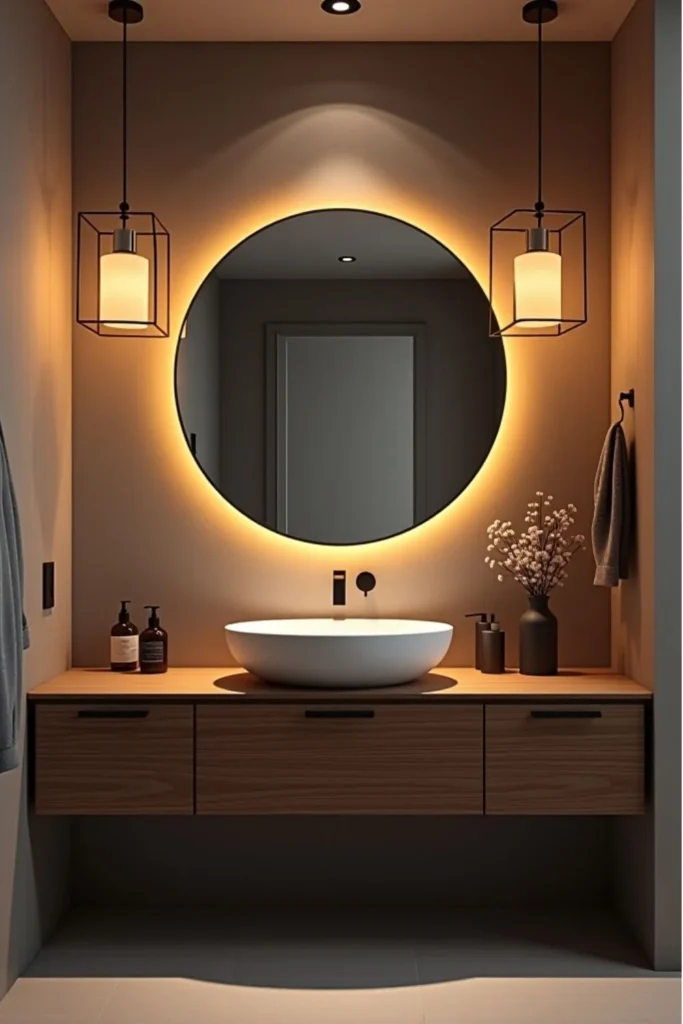
Creating a refined lighting scheme starts with understanding the three core elements of good mirror illumination: brightness, distribution, and temperature. For minimal bathroom mirror lighting, the focus is on seamless integration—lights that appear as part of the architecture rather than an afterthought.
Begin by assessing the size of your mirror and the tasks performed in front of it. Larger mirrors typically require multiple light sources or a continuous strip of illumination to avoid shadows. Conversely, a small vanity mirror can often be lit with a single, well‑placed fixture. The key is to provide even lighting that reduces glare while maintaining a soft, natural feel.
Key Benefits of Minimal Bathroom Mirror Lighting
- Clarity: Uniform light eliminates dark spots, ensuring a clear view for grooming.
- Ambiance: Subtle illumination adds a spa‑like atmosphere without the need for additional décor.
- Energy Savings: Modern LED options consume less power while delivering high output.
- Space Efficiency: Slim fixtures free up wall space, perfect for compact bathrooms.
When you combine these benefits with a minimalist aesthetic, the result is a bathroom that feels larger, cleaner, and more inviting.
Choosing the Right Light Fixtures for Minimalism
Not all light fixtures are created equal. For a minimal bathroom mirror lighting approach, look for designs that blend into the wall or mirror frame. Two popular choices are LED strip lights and recessed sconces.
LED strips can be mounted directly above or below the mirror, providing a continuous line of light that looks almost invisible. Choose a low‑profile, dimmable version with a color temperature around 3000–4000 K for a warm yet natural glow. Recessed sconces, installed within a shallow cavity, offer a sleek silhouette that stays out of sight while delivering ample illumination.
When selecting fixtures, pay attention to the following specifications:
- CRI (Color Rendering Index): Aim for 90+ to ensure true color representation, essential for makeup application.
- Lumen Output: Roughly 500–700 lumens per fixture works well for most vanity mirrors.
- IP Rating: A minimum of IP44 is recommended for bathroom environments to protect against moisture.
Choosing the right fixtures sets the foundation for an elegant, minimal bathroom mirror lighting design that lasts for years.
Placement Strategies for Balanced Illumination
Even the most beautiful fixtures will fall short if placed incorrectly. Proper positioning ensures that light spreads evenly across the mirror, eliminating shadows caused by facial features.
Here are three proven placement methods:
- Above‑Mirror Mounting: Install lights 75–85 cm above the mirror surface. This height mimics natural overhead lighting and reduces glare.
- Side‑by‑Side Sconces: Place two sconces on either side of the mirror, about 20 cm from the edges. This arrangement creates balanced light and works well for larger mirrors.
- Under‑Mirror LED Strips: Mount strips directly under the mirror for a soft, indirect glow. This technique is ideal for modern, frameless mirrors.
When positioning lights, consider the user’s height and typical viewing angle. A simple test: stand in front of the mirror and ask a friend to check for any dark patches. Adjust the fixtures until the light is uniform.
Energy Efficiency and Smart Controls
In today’s eco‑conscious world, integrating energy‑saving technology into minimal bathroom mirror lighting is both practical and stylish. LEDs dominate the market due to their low power consumption and long lifespan—often exceeding 30,000 hours.
Pairing LED fixtures with smart dimmers or motion sensors adds convenience and further reduces energy use. A dimmer allows you to adjust brightness for different tasks, from a bright setting for shaving to a softer tone for a relaxing soak. Motion sensors automatically turn lights on when someone enters the bathroom, ensuring you never waste electricity.
For those interested in home automation, many smart lighting systems integrate seamlessly with voice assistants like Amazon Alexa or Google Assistant, enabling hands‑free control—perfect for a hands‑busy environment.
Design Trends that Complement Minimalism
Minimalism is more than a lack of clutter; it’s a deliberate design language that emphasizes clean lines, neutral palettes, and subtle textures. Your minimal bathroom mirror lighting should echo these principles.
Current trends include:
- Backlit Mirrors: Mirrors with integrated LED panels create a floating effect, enhancing depth without adding visible fixtures.
- Monochrome Finishes: Black, white, or brushed metal housings blend effortlessly with most bathroom color schemes.
- Floating Vanities: Pairing floating vanities with recessed lighting reinforces the airy, uncluttered look.
- Organic Shapes: Rounded or oval mirrors soften the stark lines of minimal design, while still maintaining a sleek aesthetic.
Integrating these trends can elevate your bathroom from simply functional to a curated space that reflects modern taste.
Maintaining Your Minimal Mirror Lighting
Even the most durable fixtures need occasional upkeep. Since bathrooms are high‑humidity zones, moisture can cause buildup on light covers, diminishing brightness over time.
Follow these maintenance tips to keep your minimal bathroom mirror lighting looking pristine:
- Regular Cleaning: Wipe fixtures with a soft, dry cloth weekly. For tougher grime, use a damp cloth with mild soap—avoid abrasive cleaners.
- Check Connections: Inspect wiring and sockets annually for signs of wear or corrosion.
- Replace LEDs Promptly: Though LEDs last long, their brightness may dim after years of use. Replace strips or bulbs to maintain consistent illumination.
- Ventilation: Ensure your bathroom has proper ventilation to reduce humidity, extending the life of your lighting.
Consistent care ensures that your minimalist lighting remains a timeless feature for years to come.
Quick Tips for Minimal Bathroom Mirror Lighting
- Choose dimmable LED fixtures with a CRI of 90+ for true color rendering.
- Mount lights 75–85 cm above the mirror to minimize glare.
- Consider backlit mirrors for a seamless, floating effect.
- Integrate motion sensors to save energy and add convenience.
- Clean fixtures regularly with a soft cloth to preserve brightness.
Common Mistakes to Avoid
Even seasoned decorators can fall into traps that compromise the effectiveness of minimal bathroom mirror lighting. Here are some pitfalls and how to prevent them:
- Overloading the Circuit: Installing too many high‑wattage fixtures can cause flickering or tripped breakers. Stick to LED solutions and verify load capacity.
- Incorrect Color Temperature: Using cool, blue‑tinted light (above 5000 K) can make skin appear washed out. Opt for warm‑neutral tones (3000–4000 K) for a flattering glow.
- Neglecting Shadows: Placing a single light source directly above can cast shadows on the face. Use side sconces or a combination of above‑and‑below lighting to achieve uniform coverage.
- Ignoring Moisture Protection: Skipping the IP rating can lead to premature fixture failure. Always choose fixtures rated for bathroom use.
- Skipping Dimmer Installation: Fixed brightness limits flexibility. A dimmer offers control for various activities, from grooming to relaxation.
Frequently Asked Questions
What is the ideal lumen output for bathroom mirror lighting?
For most vanity mirrors, 500–700 lumens per fixture provides sufficient brightness without glare. Larger mirrors may require multiple fixtures to reach a total of 1200–1500 lumens.
Can I use regular bulbs in my minimal bathroom mirror lighting setup?
While it’s possible, LED bulbs are highly recommended for their energy efficiency, longer lifespan, and superior color rendering. They also allow for slimmer designs that suit minimalist aesthetics.
How far should the light be placed from the mirror?
Position fixtures approximately 75–85 cm above the mirror surface. This distance mimics natural overhead lighting and reduces shadow formation.
Are motion‑sensor lights suitable for a bathroom?
Yes, motion sensors are ideal for bathrooms, especially in high‑traffic homes. They turn on automatically, save energy, and ensure you never walk into a dark space.
What maintenance does LED strip lighting require?
LED strips need minimal upkeep. Simply wipe them clean with a dry or slightly damp cloth. Replace the strip if it begins to dim noticeably, which typically occurs after several years of use.
Is backlit mirror lighting truly minimalist?
Backlit mirrors eliminate visible fixtures, creating a floating effect that aligns perfectly with minimalist design. They provide even illumination and a sleek, modern look.
For additional guidance on handling bathroom upgrades, you may find our guide on covering an open toilet hole useful, especially when planning a comprehensive remodel.
If you’re looking to enhance the overall aesthetic of your home, explore ideas in hallway décor with ceramic pieces to maintain a cohesive design language throughout.
Finally, consider how lighting interacts with other spaces. Our article on cozy bedroom lighting offers complementary tips for creating a harmonious lighting palette across your home.
By thoughtfully selecting fixtures, positioning lights correctly, and embracing energy‑saving technology, you can master minimal bathroom mirror lighting that serves both form and function. Embrace these principles, experiment with the suggestions, and enjoy a bathroom that feels brighter, larger, and effortlessly stylish.