
Table of Contents
- Comfort and Warmth: How Carpet vs Laminate in Bedroom Affects Your Sleep
- Why Carpet Often Wins on Warmth
- Laminate’s Modern Temperature Management
- Sound Insulation: Reducing Noise with Carpet vs Laminate in Bedroom
- Carpet’s Natural Sound‑Absorbing Qualities
- Laminate’s Acoustic Considerations
- Allergy Management: Health Implications of Carpet vs Laminate in Bedroom
- Carpet and Allergens
- Laminate’s Allergen‑Friendly Nature
- Durability and Maintenance: Long‑Term Performance of Carpet vs Laminate in Bedroom
- Carpet Longevity
- Laminate Resilience
- Design Flexibility: Styling Options with Carpet vs Laminate in Bedroom
- Carpet’s Textural Impact
- Laminate’s Visual Versatility
- Budget Considerations: Cost Analysis of Carpet vs Laminate in Bedroom
- Initial Investment
- Installation and Long‑Term Expenses
- Environmental Impact: Sustainable Choices for Carpet vs Laminate in Bedroom
- Carpet Sustainability
- Laminate’s Green Credentials
- Quick Tips for Choosing Between Carpet and Laminate in Bedroom
- Common Mistakes When Selecting Carpet vs Laminate in Bedroom
- Frequently Asked Questions
- Is carpet better than laminate for a bedroom with hardwood floors underneath?
- Can I install laminate over a carpeted subfloor?
- How does carpet affect bedroom heating bills?
- What is the best way to clean laminate in a bedroom?
- Are there hypoallergenic carpet options for the bedroom?
- Can I use radiant floor heating with carpet in the bedroom?
Carpet vs Laminate in Bedroom – Which Flooring Wins for Comfort and Style?
Choosing the right floor for your bedroom can feel like a balancing act between comfort, durability, aesthetics, and budget. While some homeowners gravitate toward the plush warmth of carpet, others appreciate the sleek, low‑maintenance appeal of laminate. Understanding the nuances of carpet vs laminate in bedroom settings helps you create a space that not only looks great but also supports restful sleep and everyday living.
In this guide we’ll break down the key factors that matter most—thermal insulation, sound absorption, allergy considerations, installation complexity, and long‑term cost. You’ll also find practical styling ideas, quick actionable tips, and common pitfalls to avoid. By the end, you’ll be equipped to make an informed decision that aligns with your lifestyle and design vision.
Whether you’re redesigning a master suite, furnishing a guest room, or setting up a cozy nursery, the choice between carpet and laminate in bedroom environments can dramatically influence both the look and feel of the space.
Comfort and Warmth: How Carpet vs Laminate in Bedroom Affects Your Sleep

One of the most immediate differences you’ll notice when comparing carpet vs laminate in bedroom is the level of softness underfoot. Carpet provides a cushioned surface that can be especially inviting on cold mornings, while laminate feels hard and cool, often requiring a rug for added comfort.
Why Carpet Often Wins on Warmth
- Carpet traps air within its fibers, offering natural insulation that reduces heat loss.
- It stays warmer longer after the heating system cycles off, creating a cozy feel for bedtime.
- Plush carpet can also serve as a thermal barrier for flooring that sits over colder subfloors, such as concrete.
Laminate’s Modern Temperature Management
- Laminate can be paired with under‑floor heating systems, delivering evenly distributed warmth without the bulk of carpet.
- Because it’s a solid surface, it reflects heat back into the room, which can be advantageous in well‑heated homes.
- For those who prefer a cooler surface in warm climates, laminate remains comfortably cool without additional cooling systems.
Ultimately, if you prioritize a soft, warm step when you roll out of bed, carpet vs laminate in bedroom leans toward carpet. However, if you value the sleekness of a hard surface and plan to use radiant heat, laminate can be a competitive alternative.
Sound Insulation: Reducing Noise with Carpet vs Laminate in Bedroom
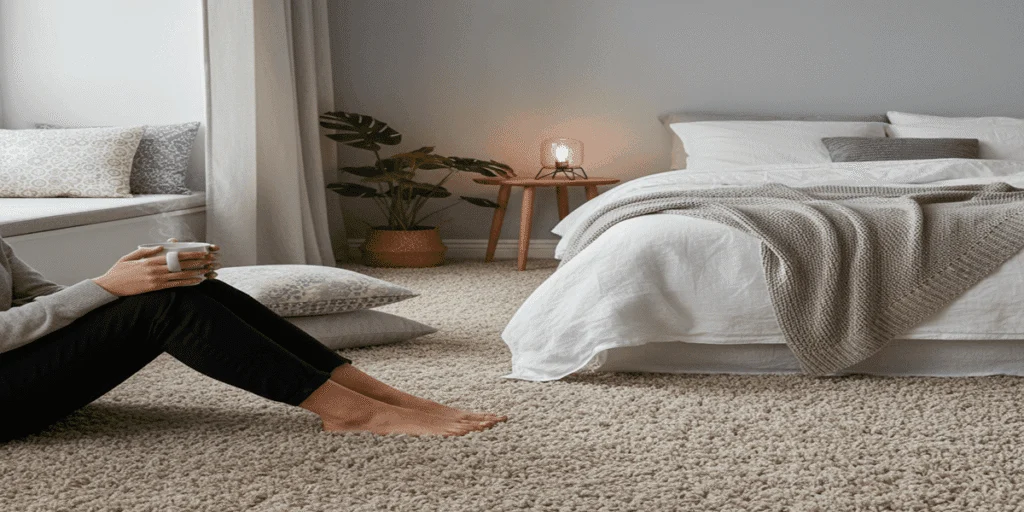
Sound control is a hidden yet vital aspect of bedroom design. Unwanted echoes and footfall noise can disturb a peaceful night’s sleep, especially in apartments or multi‑family homes.
Carpet’s Natural Sound‑Absorbing Qualities
Carpet fibers absorb impact sounds, making it an excellent choice for bedrooms where you want to minimize creaks, thuds, and the patter of footsteps. The denser the pile, the better the acoustic dampening, which is why many sound‑engineered studios still use high‑grade carpet.
Laminate’s Acoustic Considerations
Laminate is a hard surface that reflects sound, potentially amplifying foot traffic noise. To offset this, you can add area rugs, acoustic underlay, or wall‑mounted acoustic panels. When paired with a thick rug, laminate can achieve respectable sound reduction without sacrificing its sleek look.
For those living in noisy neighborhoods or shared walls, carpet vs laminate in bedroom often tilts toward carpet for its innate quieting effect. If you prefer a modern aesthetic but still need sound control, complement laminate with strategic rug placement.
Allergy Management: Health Implications of Carpet vs Laminate in Bedroom

Allergies can dictate flooring choices more than any design preference. Dust mites, pet dander, and pollen tend to settle differently on carpet and laminate.
Carpet and Allergens
While carpet can trap allergens within its fibers, modern low‑pile or hypoallergenic carpet options, combined with regular vacuuming and professional cleaning, can mitigate these concerns. However, deep‑cleaning carpet can be more involved than maintaining laminate.
Laminate’s Allergen‑Friendly Nature
Laminate’s smooth surface doesn’t harbor dust mites or pollen, making it a preferred choice for allergy sufferers. A simple sweep or mop keeps the floor virtually allergen‑free. Pair it with a high‑efficiency air purifier for optimal indoor air quality.
When weighing carpet vs laminate in bedroom for health reasons, consider the severity of allergies and your willingness to maintain the floor. Laminate often wins for low‑maintenance allergen control, but carpet can still be viable with proper care.
Durability and Maintenance: Long‑Term Performance of Carpet vs Laminate in Bedroom
Bedrooms experience less foot traffic than entryways or living rooms, but they still endure daily wear from shoes, toys, and occasional spills. Understanding the durability and maintenance requirements of carpet vs laminate in bedroom settings helps you plan for the long term.
Carpet Longevity
- High‑quality wool or nylon carpets can last 10‑15 years with regular vacuuming and spot cleaning.
- Stain‑resistant treatments extend the life of synthetic fibers, making them suitable for pet owners.
- Professional deep‑cleaning every 12‑18 months revitalizes the pile and prevents odor buildup.
Laminate Resilience
- Laminate is highly resistant to scratches, dents, and moisture when sealed properly.
- Simple sweeping and occasional damp mopping keep it looking new for 15‑20 years.
- Choosing a high‑wear wear layer (AC4 or AC5 rating) ensures the surface remains pristine even in busy households.
From a maintenance standpoint, carpet vs laminate in bedroom generally favors laminate for its easy cleaning. Yet, a well‑maintained carpet can offer comparable durability while delivering added comfort.
Design Flexibility: Styling Options with Carpet vs Laminate in Bedroom
Flooring sets the tone for color palettes, textures, and overall vibe. Both carpet and laminate offer diverse styling possibilities, but they influence the room’s visual language differently.
Carpet’s Textural Impact
Carpet comes in an extensive range of colors, patterns, and textures—from subtle neutrals to bold geometrics. It can serve as a focal point, especially in a monochrome bedroom where the floor adds depth and warmth.
Laminate’s Visual Versatility
Laminate mimics natural wood, stone, and even tile finishes, allowing you to achieve high‑end looks at a fraction of the cost. Paired with a decorative area rug, laminate can support both a minimalist aesthetic and a layered, cozy vibe.
For inspiration on mixing textures, check out our guide on Living Room Décor with Small Accent Stools – Stylish Tips & Ideas. Though focused on living rooms, the principles apply to bedroom layering with rugs and furniture.
When comparing carpet vs laminate in bedroom, think about how each material can complement your chosen color scheme, furniture style, and decorative accents.
Budget Considerations: Cost Analysis of Carpet vs Laminate in Bedroom
Financial planning is a core part of any renovation project. Both carpet and laminate come in a wide price range, but understanding the total cost of ownership is essential.
Initial Investment
- Carpet: $2‑$5 per square foot for basic synthetic options; premium wool can reach $8‑$12 per square foot.
- Laminate: $1‑$3 per square foot for standard grades; high‑end designs with realistic wood grain may cost $4‑$7 per square foot.
Installation and Long‑Term Expenses
- Carpet installation includes padding (often $0.50‑$1 per square foot) and may require professional labor ($0.50‑$1 per square foot).
- Laminate installation is generally DIY‑friendly, using click‑lock systems that reduce labor costs; professional installation averages $1‑$2 per square foot.
- Maintenance: Carpet requires periodic deep cleaning ($100‑$200 per service), while laminate needs occasional cleaning supplies, costing far less over time.
When evaluating carpet vs laminate in bedroom, calculate both upfront and recurring expenses. Laminate often emerges as the more budget‑conscious choice, especially for renters who may need a reversible solution.
Environmental Impact: Sustainable Choices for Carpet vs Laminate in Bedroom
Eco‑friendly design is increasingly important to modern homeowners. Both carpet and laminate can be sourced responsibly, but their environmental footprints differ.
Carpet Sustainability
Natural fibers such as wool and sisal are renewable and biodegradable, while many synthetic carpets are made from recycled PET bottles. Look for certifications like Green Label Plus to ensure low VOC emissions.
Laminate’s Green Credentials
Laminate often incorporates recycled wood fibers and uses low‑VOC adhesives. Choosing products with Forest Stewardship Council (FSC) certification guarantees responsible forestry practices.
Both options can be environmentally sound when selected wisely. Consider the lifecycle—from production to disposal—when comparing carpet vs laminate in bedroom.
Quick Tips for Choosing Between Carpet and Laminate in Bedroom
- Test a sample: Walk on both materials barefoot to gauge comfort and temperature.
- Use a rug: If you love laminate’s look but crave softness, add a plush area rug for a hybrid solution.
- Check the warranty: Look for at least a 10‑year warranty on laminate wear layers and a 5‑year stain guarantee on carpet.
- Plan for pets: Opt for low‑pile carpet or high‑wear laminate to handle claws and spills.
- Consider resale: Laminate often appeals to a broader range of buyers, potentially boosting resale value.
Common Mistakes When Selecting Carpet vs Laminate in Bedroom
- Ignoring subfloor condition: Uneven subfloors can cause laminate to warp or carpet to show lumps.
- Choosing the cheapest option: Low‑quality laminate may chip, while cheap carpet can shed fibers quickly.
- Overlooking moisture: Basements or high‑humidity bedrooms need moisture‑resistant laminate or carpet with proper backing.
- Neglecting lighting: Dark carpet can make a room feel smaller; pair it with adequate lighting or choose lighter laminate tones.
- Skipping professional advice: A flooring specialist can advise on the best underlayment for both carpet and laminate.
Frequently Asked Questions
Is carpet better than laminate for a bedroom with hardwood floors underneath?
Both can work well, but carpet typically requires a padding layer to provide cushioning and prevent unevenness. Laminate, when installed with an appropriate underlayment, can sit directly over hardwood without causing damage.
Can I install laminate over a carpeted subfloor?
It’s not recommended because the carpet can compress, leading to an uneven surface that may cause laminate boards to click apart. If you love laminate’s look, it’s best to remove the carpet first or use a thin, stable underlayment.
How does carpet affect bedroom heating bills?
Carpet adds an insulating layer that can reduce heat loss through the floor, potentially lowering heating costs in colder climates. However, the difference is modest; a well‑insulated home will see the biggest savings.
What is the best way to clean laminate in a bedroom?
Regularly sweep or vacuum with a soft brush attachment, then mop with a damp (not wet) microfiber cloth using a laminate‑safe cleaner. Avoid abrasive tools that could scratch the surface.
Are there hypoallergenic carpet options for the bedroom?
Yes, low‑pile synthetic carpets made from nylon or polyester, especially those with antimicrobial treatments, are less likely to trap allergens. Pair them with a high‑efficiency vacuum for optimal results.
Can I use radiant floor heating with carpet in the bedroom?
Radiant heating works best with thin, low‑pile carpet and a high‑conductivity underlayment. Thick carpet can insulate the heat, reducing efficiency. For maximum performance, laminate with radiant heating is often preferred.
Choosing between carpet vs laminate in bedroom ultimately hinges on your priorities—whether you value plush comfort, acoustic quiet, allergen control, budget, or sustainable sourcing. By weighing each factor and applying the tips shared above, you can create a bedroom that feels both inviting and functional.
Ready to start your flooring project? Explore more design inspiration and practical guides on The Homara to transform every room in your home.